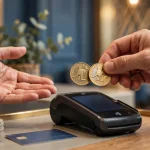
PayID uses a registered identifier to route a bank transfer through the NPP; it does not hold funds in a separate wallet.

PayID is a way to identify where a bank transfer should go without using the recipient’s account number and BSB as the detail you enter. The identifier can be something familiar, such as a mobile number or email address, and is registered with a bank account. PayID uses that identifier to direct a payment through Australia’s New Payments Platform (NPP), which connects participating banks for quick transfers.
That is the basic picture behind a PayID payment: the identifier points to a bank account, and the NPP carries the transfer between banks. PayID is the addressing method; it is not a separate wallet holding your money. The funds move through the banking system rather than sitting in a PayID balance.
When a payment is made using PayID, the sender uses the recipient’s registered identifier to direct the transfer. The bank processes it through the NPP, allowing money to move quickly between banks. The identifier is intended to make the destination easier to specify than a string of banking details, but the payment is still a bank transfer.
If you’re exploring new PayID pokies in Australia for 2026, check the available operator details carefully before choosing. This list gives you a concise reference to the facts provided for each option.
Roby Casino
Roby Casino is listed with a Curaçao eGaming licence held by Roby Games Ltd. The provided information does not specify PayID details.
Golden Pokies
Golden Pokies is listed with a Curaçao licence. No payment-method or other operating details are provided here.
Ricky Casino
Ricky Casino lists crypto payouts in under an hour and PayID payouts in 1–3 business days. The minimum deposit is A$20, or A$30 to qualify for the bonus.
MrPacho
MrPacho lists crypto payout times of 30–120 minutes and fiat payout times of 24–72 hours. Its minimum deposit is A$30.
LevelUp Casino
LevelUp Casino is listed with Curaçao eGaming licence OGL/2023/174/0082, held by Dama N.V. Its minimum deposit is A$15.
Vegaz Casino
Vegaz Casino is listed with Curaçao licence OGL/2024/1335/0780. Its minimum deposit is EUR 20.
SpinsUp
SpinsUp is listed with a Curaçao Gaming Control Board licence, OGL/2023/174/0082, held by Dama N.V. No payment-method details are provided here.
Lucky Dreams
Lucky Dreams is listed with a Curaçao licence and a minimum deposit of A$20 via POLi. The provided details do not specify PayID.
Uptown Pokies
Uptown Pokies is listed with a Curaçao licence and has been operating since 2017. Its minimum deposit is A$20.
Bizzo Casino
Bizzo Casino is listed with a Curaçao Gaming Control Board licence held by TechSolutions Group N.V. No payment or deposit details are provided here.
That distinction matters when you see PayID described as a payment option in a gambling cashier. The cashier may display instructions for transferring funds, but the bank-to-bank movement is handled by PayID and the NPP. The casino’s payment page and PayID perform different jobs: one presents the payment route, while the other moves money between accounts.
The identifier does not tell you anything about the business receiving a transfer. It is a way to address a payment, not a stamp of approval or a promise about what happens after funds arrive. That is a separate question from how the transfer itself works.
A site that displays PayID as a deposit method may direct a customer to make a transfer using an identifier. Once the payment is sent, the site needs to recognise it and reflect it in the account balance. The exact cashier layout and instructions depend on the operator; PayID itself does not create a standard casino interface.
For online casino deposits, PayID transactions are typically completed within seconds. That describes the transfer speed, not a guarantee about every stage on a gambling site. A payment method can move money quickly while the recipient’s system takes time to register it. So it helps to separate “the bank transfer has moved” from “the site has updated an account”.
I would not treat a fast-looking payment screen as proof that the whole process is instant. The key point is narrower: PayID and the NPP are built for quick bank transfers, and deposits made through this route are typically completed within seconds. The casino’s own handling is another part of the process.
A mobile number or email address is easier to recognise than banking digits, which can make PayID feel straightforward. But it remains a payment identifier tied to a bank account. It does not make a transfer informal or reversible, and it does not change the fact that money is being sent from one account to another.
Nor does the familiar format mean that every PayID belongs to an individual. A receiving business may use an identifier associated with its payment arrangements. The identifier’s role is simply to route the transfer to the registered destination. It does not establish who operates a website, how that business is regulated, or what obligations apply to it.
There is a legal point worth keeping separate from the mechanics. Under Australia’s Interactive Gambling Act 2001, providing real-money online casino games, including pokies, to people located in Australia is illegal for operators. Explaining how a payment network works is not an endorsement of using it to fund prohibited services.
It is tempting to reduce the process to “enter an identifier, send money, see a balance”. That is only the banking part in outline. The identifier routes the payment through the NPP; a casino cashier, where one is offered, is a separate system that may display its own instructions and update its own records.
This is why the word “instant” needs a clear subject. PayID can move a deposit between banks in seconds, but that does not mean every website interaction is completed at the same moment. The payment network’s speed and a recipient’s account display are not identical measures.
PayID is an addressing method used to route payments through Australia’s New Payments Platform (NPP); it is not a separate wallet and does not hold a balance.
So, in plain terms, PayID gives a bank transfer a recognisable destination, and the NPP helps carry that transfer quickly between banks. For deposits shown by online casino cashiers, the bank-side payment is typically completed within seconds. That is the mechanics—not a recommendation to use PayID for gambling, and not a guarantee about a site’s status or conduct.
A PayID transfer is not something to try and correct after the fact. Once you confirm it, the transaction is irreversible. Before entering a payment into a banking app, pause and check the details on the screen against the details you intended to use. If anything is unclear, stop rather than sending first and hoping support can retrieve the money.
There is an important Australian context before any payment check: the Interactive Gambling Act 2001 makes it illegal for an operator to provide real-money online casino games, including pokies, to people physically located in Australia. That prohibition applies to the service provider. A payment method appearing on a cashier page does not change the legal position or make the service lawful. I would not send money to an online casino offering real-money play to people in Australia.
Your PayID details need to match the PayID registered with your bank. That sounds simple, but it is easy to overlook if you have more than one identifier or have changed the details associated with an account. A mobile number and an email address are not interchangeable just because both can be used as PayIDs.
Check which identifier your bank has registered, then compare it carefully with the one shown in the payment instructions. Watch for a mistyped character, an old email address or a number that is no longer linked to your bank account. Do not assume that a familiar-looking label is enough; make sure the actual PayID details are the ones you expect.
If the payment page gives instructions that do not line up with your bank’s registered details, do not guess which version is right. Close the payment step and seek clarification through an appropriate channel. A mismatch is a reason to pause, not a small formatting problem to work around. The confirmed transfer cannot simply be recalled if you later discover you sent it to the wrong details.
It also helps to separate the PayID itself from any description attached to the recipient. Read the information your bank displays before authorising a transfer. If the recipient shown is unexpected or you cannot tell who would receive the funds, do not proceed. A payment screen is the last useful point to catch a mistake. After confirmation, your options are much narrower.
Your bank controls the daily limit for PayID transfers. A specialist review reports that PayID limits are set by the customer’s bank; that is a reported arrangement, not a promise that every bank applies the same settings or handles them in the same way. Check your own bank’s current terms and app settings rather than relying on a limit mentioned elsewhere.
If a payment is larger than the limit available to you, do not treat that as a prompt to split it into several transfers. The limit is a bank control, and dividing a payment may not resolve the issue or make the underlying transaction appropriate. If the bank declines or blocks an attempted transfer, stop and contact the bank through its official support channel. Repeated attempts can make it harder to understand what happened and do not remove the need to check the recipient and purpose.
A limit may also be different from what you remember. Banking settings can change, and the amount you can send may depend on your account’s current controls. Check before entering payment details, especially if you have not used PayID recently. Do not rely on an old screenshot, a forum post or another person’s banking experience as a substitute for your own bank’s information.
Before approving any PayID payment, take one last look at the recipient details and the amount shown. Confirm only when both match what you intended and you understand where the money is going. Once the transfer is confirmed, PayID does not provide a simple undo button. If you make a mistake, contact your bank promptly, but do not assume it can reverse a completed transaction.
That is why “I’ll sort it out afterwards” is a poor payment plan. A fast payment leaves little room to catch an error after the confirmation step. If the payment instructions change unexpectedly, the recipient details do not match, or you feel rushed to approve, stop. A request to act quickly is no substitute for checking the transaction.
Keep a record of what you reviewed and any communication about the payment, without sharing banking codes or security credentials. Never give another person access to your banking app to complete a transfer for you. If you are unsure whether a payment request is genuine, ask your bank using contact details from its official app or website—not details supplied in the request itself.
These checks can help prevent a mistaken transfer, but they do not establish that an online casino is authorised to offer real-money play in Australia. PayID is only a payment method; its availability does not make a prohibited service lawful. If the proposed payment is for real-money pokies offered to people in Australia, the safest decision is not to send it.
Before treating PayID as a green light, separate two questions: whether a payment option appears in a cashier, and whether the service may lawfully provide online casino games to people in Australia. They are not the same thing. A payment method tells you something about how a transfer may be made; it does not establish that an operator is licensed, lawful, fair or willing to pay winnings.
The legal position matters here. Under the Interactive Gambling Act 2001, it is illegal for operators to provide real-money online casino services, including pokies, to people physically located in Australia. The Australian Communications and Media Authority enforces the rules, including action to block prohibited services. There is no Australian licence that makes providing those online casino games to people here lawful. So a foreign licence, a polished website or a PayID button should not be mistaken for local authorisation.
That is a more useful starting point than a search for a “new” PayID option. Payment availability can change, but it does not change the law. Nor should a claim that an operator is licensed somewhere overseas be presented as proof that it can legally serve Australian residents.
Legal Warning
Under the Interactive Gambling Act 2001, it is illegal for operators to provide real-money online casino games, including pokies, to people located in Australia.
If you are checking what a cashier page says, look for PayID listed as an available payment method and read the conditions attached to it. The page should make clear what details it requires and whether there are separate rules for deposits and withdrawals. A logo elsewhere on the site is not a substitute for the cashier information: payment options can vary, and the cashier is where the operator states what it currently accepts.
But treat that check for what it is. Finding PayID in the cashier does not verify a licence or make an otherwise prohibited service lawful. Likewise, the presence of a payment method does not guarantee that a transfer will go through or that a withdrawal will be paid. Keep those points distinct.
PayID works through Australia’s New Payments Platform, but that does not mean every bank will process every payment to a gambling merchant. A specialist review has reported that some Australian banks, including members of the Big Four, may occasionally block PayID transfers to merchants they identify as gambling-related under their acceptable use policies. This is a reported possibility, not a rule that can be assumed to apply to every bank or every transaction. Policies and payment decisions may change.
If a transfer is declined, do not keep repeating it or try to disguise its purpose. Check your bank’s current terms and contact the bank if you need to understand a declined transaction. A payment failure is not evidence that PayID itself is unavailable everywhere; it may reflect the bank’s handling of that recipient or its own policy.
PayID deposit minimums are set by the operator, not by the payment network. Specialist reviews describe AU$10 to AU$20 as a common starting range, while some operators are reported to accept deposits from AU$5. These figures are not a promise about any particular cashier, and the minimum shown for one payment method may differ from the minimum for another.
Read the amount displayed in the cashier before making any decision. Check whether it is stated in Australian dollars and whether the PayID option has its own minimum. Do not assume that a low advertised minimum applies to every account or remains available. Terms can change, and the cashier is the place to confirm the stated payment conditions.
I would also avoid treating a low minimum as a sign of quality. It only tells you the amount the operator says it will accept through that route. It says nothing by itself about legality, consumer protection or whether a withdrawal will be approved.
For an Australian reader, the first check is not whether a casino has PayID. It is whether the service is permitted to offer real-money online casino games to people located in Australia. Under the Interactive Gambling Act 2001, operators may not provide those services here. A claim of overseas licensing does not override that restriction, and a cashier listing cannot establish lawful access.
If you are reviewing a payment page for informational purposes, use it only to understand the stated method and conditions. Do not read payment availability as a recommendation or as evidence that the operator has passed an Australian licensing check. The distinction is simple, even if websites blur it: PayID is a payment option; it is not a licence.
PayID can make the movement of money feel straightforward: it supports deposits as well as withdrawals, so the same payment method can be used in both directions. That can reduce the friction of switching between different ways to send and receive funds. But the payment rail is only one part of the transaction. It does not decide whether a casino accepts a payment, approves a withdrawal or adds its own conditions.
There is an important Australian context before any convenience claims: the Interactive Gambling Act 2001 prohibits operators from providing real-money online casino games, including pokies, to people in Australia. PayID’s presence as a payment option does not change that legal position or make a service lawful. This is a description of how the payment method works, not a recommendation to use it for gambling.
PayID is designed for rapid transfers, and casino deposits made through it are commonly credited within seconds. For someone dealing with a payment that has been accepted, that speed can make the balance update feel almost immediate. There is less waiting for the transfer itself to clear than with methods that take longer to reach the recipient.
A withdrawal has a different sequence. The casino must first approve the request and release the funds; only then does the bank transfer take place. A specialist review reports that, after approval, funds sent by PayID may arrive in the account within the same day. That describes the transfer after the casino has acted, not the time from clicking “withdraw” to seeing money in a bank account.
That distinction is easy to miss. A payment method can move funds quickly without making the organisation at the other end process a request quickly. If a withdrawal is still awaiting the casino’s decision, PayID has nothing to transfer yet. Fast rails, slow gate. So a quick deposit and a quick payout are not the same promise.
PayID itself does not charge a fee for moving money. Reputable venues also do not add a separate charge for deposits or withdrawals made through PayID. That is useful when considering the payment method in isolation: there is no PayID transfer fee to build into the transaction.
Still, the cost of using a payment method and the terms set by a casino are separate matters. A casino may set its own conditions around payments, and the absence of a PayID fee does not establish that every transaction is free of other charges. Read the payment terms rather than treating “PayID” as a blanket promise about the full cost.
The same separation applies to service quality. A payment option does not show that a venue is transparent, reliable or willing to pay a withdrawal. Nor does a successful deposit establish anything about how a later request will be handled. Those decisions sit with the operator, not the payment network.
For routine movement between accounts, the appeal is plain: one method can handle money going in and money coming out, and the transfer itself can be quick. If you are comparing payment methods as a technical matter, those are practical advantages. They should not be stretched into a claim that the overall gambling service is convenient or dependable.
The transfer speed also cannot remove every point of friction. Casino procedures may come before a withdrawal is released, while separate payment conditions may affect what reaches the account. PayID does not override those steps. It is the delivery route, not the decision-maker.
I would keep those pieces mentally separate: what PayID charges, what the casino charges, and how long the casino takes to approve a request. Blending them together makes a fast transfer sound like a guaranteed fast payout. It is not.
That is why a displayed PayID option should be understood narrowly. It tells you that the method is presented as available for a transaction; it does not certify the operator or its conduct. In Australia, it also does not make the provision of real-money online casino games lawful. A payment method cannot change the rules around the service it is being used to access.
The useful takeaway is modest: PayID can move funds quickly in either direction, and PayID itself does not impose a transfer fee. The rest depends on the operator’s process and terms. That is a real convenience, but only at the payment layer.
A PayID option tells you how a payment may be routed; it does not tell you what the operator’s withdrawal rules are. If you are comparing payment terms, start with the cashier’s written conditions rather than a headline promising fast cash-outs. The details that affect what you can request, what may be deducted and how long a payment might take are separate from PayID itself.
There is an important Australian context here: the Interactive Gambling Act 2001 prohibits operators from providing real-money online casino games, including pokies, to people physically located in Australia. Payment terms do not change that legal position. This comparison is informational, not a recommendation to use an offshore gambling service.
A minimum withdrawal is the smallest amount the operator will let you request. Specialist reviews report PayID withdrawal minimums commonly in the AUD 20–50 range, but conditions vary by operator and can change. Treat that range as a guide to what you may encounter, not as a guaranteed limit for any particular cashier.
Check the withdrawal minimum separately from the deposit minimum. They are different rules, and a low amount accepted into an account does not mean the same amount can be withdrawn. Look for the precise figure in the payment terms or cashier page, and check whether it applies to PayID specifically or to withdrawals generally.
Also note whether the minimum applies to each request or to the balance you must have before requesting a payout. If the wording is unclear, do not assume the more favourable interpretation. I would want the rule stated plainly before deciding whether the payment conditions suit me.
A withdrawal fee may be described as a fixed charge, a deduction below a threshold, or a condition tied to the amount requested. Those are not interchangeable. A specialist review has reported cases where an operator deducts A$5–A$10 from withdrawals below an internal threshold, with thresholds commonly set at A$100 or A$200. These are reported examples, not a universal PayID charge or a rule that applies across operators.
Comparing Terms
Check Withdrawal Minimums
Identify the smallest amount the operator allows you to request via PayID
Review Fee Thresholds
Determine if deductions apply to withdrawals below specific amounts, such as A$100 or A$200
Map the Processing Window
Record the pending period for review and the estimated transfer time after approval
Read the fee clause closely. Does a deduction apply to every withdrawal, only to smaller requests, or only in particular circumstances? Is the threshold based on the amount requested or the remaining account balance? If the cashier and the terms page appear to say different things, that is a reason to pause rather than guess.
It is also worth separating PayID’s own costs from an operator’s terms. PayID does not charge transfer fees, but that alone does not establish that every casino-related transaction is free of operator deductions. The written withdrawal conditions are what matter for a comparison. Small print matters.
A payment can be held for review before it is sent, so a transfer-time claim may describe only part of the process. Specialist reviews describe operator pending periods ranging from no wait to 12 hours; they also report that manual reviews can take 12–24 hours or longer over weekends. These are variable operator-side conditions, not a timing promise for your request.
Reported payout speeds also differ between casinos. One specialist review’s testing recorded a range from around five minutes to 24 hours, depending on the casino and when the request was made. That spread is useful mainly as a reminder that a single fast result cannot predict another operator’s handling. Check whether the stated time starts when you submit the request, after internal approval, or when funds are sent.
For a fair comparison, record the operator’s stated pending period, any separate processing estimate and the event that starts each clock. If the terms only say “fast” without defining what that means, the wording does not give you a usable timeframe. Avoid treating a best-case report as the normal outcome.
When reviewing payment conditions, write down the PayID withdrawal minimum, any threshold-based deductions and the stated processing stages. Include the date you checked the terms: cashier rules can be revised, and a saved note can become outdated. Compare like with like, especially whether the advertised timing refers to casino review or the bank transfer after approval.
Do not rank payment options by speed alone. A quick transfer is of limited use if the minimum is unsuitable or a deduction changes the amount received. Conversely, a clear minimum and fee policy do not guarantee that a request will be approved or processed on a particular schedule. These terms describe conditions, not assurances.
The practical standard is simple: you should be able to find the withdrawal minimum, identify any fee or threshold, and understand how processing time is described. If any of those points is missing or contradictory, do not fill the gap with assumptions. PayID is only one part of the payment arrangement.
A PayID transfer can move quickly once a casino releases a withdrawal, but that is only one part of the process. Before funds are sent, the operator may review the request and check the account. So the time shown for a bank transfer does not necessarily tell you how long it will take to receive money after requesting a payout.
Attention A fast bank transfer speed does not remove the operator's internal review process, which can add significant time before funds are released.
There is an important Australian legal context here: under the Interactive Gambling Act 2001, providing real-money online casino games, including pokies, to people in Australia is illegal for operators. A payment option does not change that position. The details below explain how withdrawal timing and bonus terms may work in general; they are not a recommendation to use an offshore casino.
A withdrawal may pass through distinct stages: the casino receives the request, checks it, approves it and then initiates the transfer. PayID’s role begins when money is sent through the payment system. Any wait before approval belongs to the operator’s process, not to the transfer between banks.
A specialist review describes casino-initiated PayID withdrawals as potentially having a pending period of 24–72 hours before funds leave the casino’s system. That is a reported practice, not a fixed rule for every operator. The same kind of review puts the transfer after approval at 12–24 hours and gives a total request-to-receipt estimate of 2–4 days when an internal pending period is included. Treat those figures as an indication reported by a specialist review, not a deadline or promise.
The casino’s own checks can affect the wait. A review may depend on the operator’s procedures and whether your identity has been verified. If documents or account details still need checking, approval can take longer than the bank transfer that follows it. I would read “PayID withdrawal time” as two clocks, not one: the casino’s decision and the payment movement.
Keep the name on your bank account aligned with the name on your casino profile. A mismatch can create problems when a withdrawal is being checked, even if the PayID itself is entered correctly. If the casino requests identity documents, follow its stated process and use consistent details. Do not open extra accounts to get around a delay; multiple accounts at one casino may lead to account bans or forfeiture of winnings under its rules.
When a request sits in a pending state, check whether the operator says it is awaiting review, awaiting documents or already approved. Those statuses point to different stages. If the casino says it has approved and sent the payment, the remaining wait is no longer the same as an unreviewed request. Keep the request confirmation and any correspondence so you can describe the stage clearly if you need to contact support.
Terms such as “fast” or “instant” can refer to the payment rail rather than the full withdrawal journey. A quick bank transfer cannot remove an operator’s review, and a published estimate cannot guarantee when a particular request will be approved. That distinction is worth keeping in mind before making financial decisions.
A bonus may come with wagering conditions that must be met before related funds can be withdrawn. A specialist review describes wagering requirements in the 30x–45x range of the bonus amount. This is a reported range, not a universal condition: the exact calculation and what counts toward it depend on the written bonus terms.
Check whether wagering applies to the bonus alone or to another stated amount, which games contribute, and whether there is a deadline or other restriction. Do not assume that a displayed balance is fully withdrawable while a bonus condition remains active. If the terms are unclear, avoid treating the bonus balance as cash you can immediately take out.
Pay close attention to any maximum bet rule while wagering. Exceeding the stated maximum can void the bonus and associated winnings. The cap and the consequences should be set out in the terms; if they are not clear, do not guess. A small bet above the limit can still matter. Fine print, unfortunately, is not decorative.
For a real-money withdrawal, the practical sequence is simple: confirm the account details match, understand what checks remain, and distinguish the casino’s pending stage from PayID’s transfer stage. But no payment method makes an online casino service lawful for operators to provide to people in Australia. A PayID option is only a payment detail—not evidence of legality, approval, or a guaranteed payout.
No. Under Australia’s Interactive Gambling Act 2001, operators cannot provide real-money online pokies to people located in Australia.
PayID lets you send a bank transfer using a familiar identifier, such as a mobile number or email address, rather than entering account and BSB details. Transfers through the NPP are typically completed within seconds.
PayID supports withdrawals, but the casino must approve and process the request first. After approval, the transfer usually reaches your account within the same day; internal reviews can extend the overall wait.
PayID itself does not charge transfer fees, and reputable venues do not add fees for PayID deposits or withdrawals. Some casinos may charge their own withdrawal fees, so check the cashier’s terms before requesting a payout.