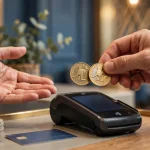
A casino’s approval queue and the payment network are separate stages, so a fast method does not guarantee an immediate cashout.

PayID’s speed comes from the banking network behind it, not from the casino’s withdrawal screen. It is an Australian bank-to-bank payment service that uses the New Payments Platform (NPP), with transfers handled in real time through Osko. That infrastructure can move funds quickly after a payment is released. It cannot, by itself, make an operator approve a withdrawal any sooner.
That distinction matters. A withdrawal request first sits with the operator; only after approval and release does the bank transfer stage begin. So a label such as “instant” describes the payment leg, not the full journey from asking for money to seeing it in an account. An internal check, a queue or a delay in releasing the funds can leave the request pending even though PayID’s transfer network is ready to carry it.
A specialist review of Australian PayID operators reported that some withdrawals were processed in under five minutes, while it placed standard bank transfers at one to three business days. Treat that as a reported comparison, not a promise that applies to every operator or request. The meaningful question is when the operator marks a withdrawal as approved and released. Before that point, the receiving bank has nothing to transfer.
If easy withdrawals matter to you, check the available payout details before choosing a casino. This list highlights the specific information provided for each operator; a licence or deposit minimum alone does not establish withdrawal speed.
Roby Casino
Roby Casino is listed with a Curacao eGaming licence held by Roby Games Ltd. No withdrawal speed is specified here, so check the payout terms directly if timing is important to you.
Golden Pokies
Golden Pokies is listed with a Curacao licence. No payout-speed details are provided, so you’ll need to check its withdrawal terms.
Ricky Casino
Ricky Casino lists crypto payouts under one hour and PayID payouts in 1–3 business days. The minimum deposit is A$20, or A$30 to qualify for the bonus.
MrPacho
MrPacho lists crypto payouts in 30–120 minutes and fiat payouts in 24–72 hours. Its minimum deposit is A$30.
LevelUp Casino
LevelUp Casino is listed with a Curacao eGaming licence, OGL/2023/174/0082, held by Dama N.V. Its minimum deposit is A$15; no withdrawal timing is specified here.
Vegaz Casino
Vegaz Casino is listed with Curacao licence OGL/2024/1335/0780. Its stated minimum deposit is EUR 20, and no payout speed is provided.
SpinsUp
SpinsUp is listed with a Curacao Gaming Control Board licence, OGL/2023/174/0082, held by Dama N.V. No withdrawal-speed details are provided here.
Lucky Dreams
Lucky Dreams lists a Curacao licence and a minimum deposit of A$20 via POLi. No payout timing is specified, so check the withdrawal terms if speed matters to you.
Uptown Pokies
Uptown Pokies is listed with a Curacao licence and has been operating since 2017. Its minimum deposit is A$20; no withdrawal speed is stated here.
Bizzo Casino
Bizzo Casino is listed with a Curacao Gaming Control Board licence held by TechSolutions Group N.V. No withdrawal-speed information is provided here.
Some specialist reviews have also described selected operators as approving eligible withdrawals automatically below $5,000 AUD. That is a reported practice, not a general feature of PayID or a guarantee that a request will bypass review. An automatic approval rule can only apply within the operator’s own conditions; it does not establish that every request qualifies or that the payment will arrive immediately from the moment it is submitted.
“Pending” and “processing” can mean the funds are still with the operator. A review may be needed before release, and an advertised instant withdrawal can therefore take longer than the banking transfer itself. One specialist review reported cases where operators promoting instant withdrawals took as long as 24 hours because of internal checks. The exact sequence and timing depend on the operator’s handling, so the advertised label is less useful than a clear explanation of what happens before release.
Once the operator sends the payment through the relevant banking route, PayID’s real-time design is the reason the final transfer can be rapid. But “real time” describes the network’s payment capability; it does not erase the earlier approval stage. A useful way to read a payout estimate is to ask whether it covers only the transfer after release or also the operator’s review. Those are separate stages, and combining them into one headline can make a delay hard to interpret.
A specialist review of PayID options reported average processing figures of 30–90 seconds for some operators. That number should be read as an account of the reviewed cases, not a universal service level. Another specialist review described selected PayID withdrawals as taking under five minutes. These reports point to the same practical distinction: the bank-to-bank leg may be very short after release, while the operator’s decision about when to release funds remains outside the payment network.
Read the withdrawal terms for language that separates approval from transfer. If an operator states only that PayID is instant, that does not tell you how long the request may remain under review. Clear terms should set out withdrawal conditions and limits, and reputable operators publish minimum and maximum withdrawal limits. The point is not to assume a particular speed, but to understand which part of the process the stated timing covers.
PayID identifiers are designed to route bank payments without sharing a conventional account number in every transaction. That does not mean the operator can release a payment without matching the withdrawal to the relevant account and completing its own checks. The payment rail moves funds; it does not decide whether a request is approved.
There is also a legal boundary that should not be blurred by payment language. Under Australia’s Interactive Gambling Act 2001, operators are prohibited from providing real-money online casino games, including slots and table games, to people located in Australia. A description of how PayID transfers work is not an endorsement or an invitation to use an offshore casino service.
The short version is precise: PayID can move a released payment in real time through Australia’s banking infrastructure, but the operator controls when a withdrawal is approved and sent. “Instant” begins at release, not at the click.
Attention: "Instant" describes the payment leg after the operator releases the funds, not the full journey from your request to receipt.
A payment method’s advertised speed tells only part of the story. The time a withdrawal takes depends on the route used to send it, and estimates for one route should not be treated as a promise for another. E-wallets, cards and bank transfers can have different processing windows even when the request is made at the same time.
There is also an important Australian context: the Interactive Gambling Act 2001 prohibits operators from providing real-money online casino games to people in Australia. This comparison is general payment information, not a recommendation to use an offshore casino or a suggestion that its services are lawful here.
PayPal and Skrill are examples of e-wallets that appear in payment-method lists. A specialist review describes e-wallet transactions as taking hours rather than days, while another general processing estimate places e-wallet withdrawals within 24 hours. Those are reported timeframes, not guarantees about what any particular operator will do.
The useful distinction is between the operator’s handling of a request and the e-wallet transfer itself. A stated e-wallet timeframe may describe one stage, or the full process, depending on how the information is presented. Check the wording rather than assuming that “processed” means the funds are already available to spend.
If a site calls an e-wallet withdrawal instant, read that as a claim to scrutinise, not as a reliable arrival time. Processing can still take longer than the payment method’s own transfer stage. The label does not explain what the operator has to do first.
Bank transfers can take longer to reach an account than e-wallet payments. A specialist review reports that traditional bank transfers may take as long as five business days to complete. Separately, general withdrawal guidance describes bank payments as taking several days. These figures are indicative reports, not a fixed schedule for every bank or operator.
“Business days” matters: a transfer that crosses a weekend or public holiday may not follow the same calendar-day count as one initiated during a working week. The receiving bank’s handling can also be distinct from the time an operator takes to release a payment. So a short operator processing estimate does not necessarily mean the money will appear in your account straight away.
For a bank transfer, look for whether the published timeframe starts when a request is submitted, when it is approved, or when the operator sends it. Those are different points in the journey. A number without that context is easy to misread.
Debit and credit cards are often named in broad payment-method overviews, but card payments do not share one universal withdrawal timetable. General processing information places card withdrawals among methods that may take several days. The actual estimate depends on the operator’s stated procedure and the payment route being used.
A card deposit appearing quickly does not establish that a withdrawal will arrive at the same speed. Depositing and receiving money are separate directions of travel, and the displayed payment option may have different rules for each. Read the withdrawal information specifically; do not rely on the deposit screen as a guide.
There is a further Australian restriction: operators must not accept credit card payments for online gambling services. A payment option being named on a site does not override that rule. Debit cards and credit cards should not be treated as interchangeable simply because both are cards.
Reported timeframes often range from a few hours up to 24 hours.
Can take several days, with some reports indicating up to five business days.
Generally listed as methods that may take several days for the withdrawal to complete.
When you compare estimates, separate the operator’s processing stage from the payment provider’s transfer stage. Then check whether the timeframe is expressed in hours, calendar days or business days, and what event starts the clock. An e-wallet may have a shorter reported window than a bank transfer, but an operator’s review can still delay release. A card or bank estimate may describe the later movement of funds rather than the wait before approval.
I would also treat broad claims about speed cautiously. A specialist review’s estimate can help you understand the kind of timeframe being discussed, but it cannot guarantee how a specific transaction will go. Payment labels are not clocks.
The practical takeaway is simple: e-wallet reports point to hours or a stated window within 24 hours; card and bank estimates can stretch to several days, with a specialist review putting traditional bank transfers as long as five business days. None of those descriptions makes a withdrawal immediate from request to receipt. Keep the stages separate, and read the terms attached to the payment route rather than relying on a headline.
A payment option can accept a deposit without offering a route to withdraw winnings. That distinction matters: the button you use to put money in does not, by itself, tell you how funds can come back out. Some payment methods are designed mainly for loading an account, while others may be listed for both deposits and withdrawals.
There is an important legal point for Australians. Under the Interactive Gambling Act 2001, providing real-money online casino games to people in Australia is illegal for operators. The payment details below describe methods mentioned in specialist reviews; they are not an endorsement or a recommendation to use an offshore casino.
Some specialist reviews describe real-money casino services as offering instant banking through providers such as POLi. That describes a deposit route, not proof that the same service will pay withdrawals back through it. Before treating any method as a cashout option, the relevant terms would need to say explicitly that withdrawals are supported.
This is an easy detail to miss when a cashier displays a method prominently. A deposit option can be convenient for funding an account and still leave the withdrawal route to be handled another way. Check the distinction in the payment terms, rather than assuming that “available” means available for both directions.
Cryptocurrency is another option that specialist reviews have associated with near-instant transactions. But speed of a transaction is not the same as withdrawal eligibility. A service may accept a digital-asset deposit while applying separate rules to withdrawals, so the method’s name alone cannot settle whether it works for cashouts.
If withdrawal support is stated, read the instructions carefully and make sure they identify the relevant account or wallet details. A mismatch between the route used to deposit and the route permitted for a withdrawal can create extra steps. The practical question is not simply whether a payment can move quickly; it is whether the operator’s stated rules allow that payment rail to receive a withdrawal.
Deposit availability does not automatically establish withdrawal support, especially for instant banking, digital assets, and prepaid vouchers.
Prepaid cards and vouchers, including Neosurf, are described in specialist reviews as deposit options that are generally not available for withdrawals. That makes them different from a method explicitly presented as supporting both deposits and cashouts. If a voucher is used to fund an account, do not assume that any balance can be returned to the voucher.
A separate payout method may be required instead. That can mean the deposit method and withdrawal method are not the same, so the written payment rules matter before any funds are added. A cashier showing a voucher logo is not enough to establish that the voucher can receive money back.
For any payment method, look for clear wording on both sides of the transaction: whether it accepts deposits and whether it can receive withdrawals. If the latter is not stated, treat the method as unconfirmed for cashouts rather than filling in the gap yourself. The distinction is especially important for instant banking, digital assets and prepaid vouchers, because their deposit availability does not automatically establish withdrawal support.
A fast deposit is only one part of a payment route. The useful detail is whether the route also supports a withdrawal, under the terms that apply to the account. That is the point to verify—not the label on the cashier button.
For people physically located in Australia, real-money online casino games are prohibited services under the Interactive Gambling Act 2001. That matters before you consider any payment process: a polished cashier page does not make an operator’s service lawful to provide here. The points below explain what withdrawal terms mean, not which platform to use.
A cashout has several stages. You submit a request, the operator checks it, and only after approval does the payment move through the chosen method. The payment stage and the operator’s review are separate. So a claim about an “instant” withdrawal should not be read as a promise that money will arrive immediately after you click the button.
I’d start with the identity rules. A specialist review reports that first withdrawals can prompt requests for identity documents. Completing verification before making a withdrawal request can help avoid a delay later, because the operator has already had the chance to check who you are. Read what documents are accepted and how they must be submitted; a blurry image or a mismatch in details can mean another round of checks.
Next, check whether the operator expects you to withdraw through the same method used to deposit. Operators generally require funds to be returned to the original method where possible. This is a security measure, but it can affect your options if that account is no longer available or cannot receive payments. If PayID is involved, use the same PayID details for deposits and withdrawals, and make sure the receiving account is linked to your profile. Different details can prompt a security review.
The cashier’s instructions should be clear before any payment is made. Look for the withdrawal steps, eligible destinations, and the operator’s stated review process. If those details are hard to find, or the terms contradict what the cashier says, treat that as a practical warning sign rather than assuming support will sort it out later. The operator’s own handling is part of the journey: even a payment method built for rapid transfers cannot bypass an internal approval check.
A specialist review has also noted that payment speed can depend on several parts of the process, including operator handling and checks on the account. That is why a headline time is only useful if you know which stage it describes. Ask whether it refers to the time to approve a request, the transfer after release, or both. A single label can hide two very different waits.
Before proceeding, check that the name and account details on your casino profile match the details held by the payment provider. Keep copies of verification materials and any withdrawal confirmation, and use the operator’s stated support channel if a request is held. Do not send identity documents through an unrelated channel.
The useful test is not whether a page calls itself an easy-withdrawal casino. It is whether the process is explained plainly: what must be verified, where funds can be sent, and what happens before the operator releases them. Clear terms are the minimum. No shortcut.
A figure on a game screen can look like money ready to leave, but it is only the displayed balance. Before a withdrawal can proceed, the operator has to treat the funds as eligible for cashout. The game you played does not, by itself, decide that. What matters is the status and conditions attached to the balance.
That distinction is easy to miss when you move from a game to the cashier. A balance may include funds that are available to play with but still subject to conditions, or it may be affected by a withdrawal rule in the operator’s terms. So I would not assume that being able to use a balance means every part of it can be withdrawn straight away. Check the account’s cashable balance and any messages shown against the withdrawal request.
Gameplay and payment are separate stages, too. A game result can change the balance on screen; it does not send money to your bank or make an operator approve a cashout. The withdrawal process begins only when you submit a request and the operator can assess it. The payment method then determines how funds move after release, not whether a particular game makes them eligible.
This is why claims that one game type produces an easier or faster cashout deserve a close look. The relevant question is not whether you played a particular kind of game, but whether the funds meet the applicable withdrawal conditions. I would be wary of treating a game label as a shortcut through the cashier process. It isn’t.
Bonus funds are one possible reason a balance may not yet be withdrawable. The terms can set wagering requirements on the bonus alone or on the deposit and bonus combined; a specialist review of casino terms notes that bonus-only wagering is the more favourable arrangement for the player. Whatever the wording, you need to meet the applicable requirement before attempting to withdraw. Read the terms attached to the offer rather than relying on the total shown beside your game.
Keep your own distinction clear: playable balance is not necessarily withdrawable balance. If the account shows separate figures, use the cashout figure as the guide and check what remains to be completed. If it does not explain the difference, ask the operator before placing more bets. That avoids making decisions based on a number that may include funds still tied to conditions.
There is also an important Australian context. The Interactive Gambling Act 2001 prohibits operators from providing real-money online casino games, including slots, poker and table games, to people physically in Australia. That applies regardless of whether the balance came from a game you recognise or whether a cashier displays a withdrawal option. A screen showing funds does not change the legal status of the service.
So, when you look at a gaming balance, separate three things: what is displayed, what is eligible to withdraw, and what the operator has actually approved for payment. They are not interchangeable. Keep the terms and the account status in view, and don’t read a game result as a promise of cashout. Different steps.
Payment options described for offshore real-money casino services include debit cards, e-wallets such as PayPal and Skrill, bank transfers and, at some operators, cryptocurrency. A specialist review reports this mix, but availability can differ between services and may change. It is a snapshot of methods mentioned in coverage, not a guarantee that a particular option is available or appropriate for you.
There is an important distinction between what a site lists and what may lawfully be offered here. Under the Interactive Gambling Act 2001, operators cannot provide real-money online casino games to people physically in Australia. Casino-style games, including slots and table games, fall within the prohibited services. The law’s focus is on operators; players do not incur legal liability simply for playing at an offshore casino. Online casino services are actively blocked, so a payment option shown on an offshore site should not be taken as evidence that the service is authorised for Australian customers.
Cards need particular care. The reviews may mention credit and debit cards together as payment categories, but Australian online gambling services must not accept credit card payments. Debit cards are a separate category, and a site’s payment page alone does not settle whether its service can be offered in Australia.
E-wallets and bank transfers are also named in descriptions of the wider payment mix. PayPal and Skrill are examples of e-wallets; a bank transfer is a direct route between accounts. Cryptocurrency appears as a further possibility at some offshore operators, not as a universal option. Availability may depend on the operator and on account or location checks.
I’d treat a payment-method logo as a narrow piece of information: it tells you what a site says it supports, not whether a withdrawal will be accepted, how it will be handled, or whether the underlying casino service is lawful here. Those are separate questions. The payment menu is not a green light.
A balance built up on a slots screen still has to pass through the casino’s withdrawal process. The game does not send money to your bank or e-wallet; the operator must approve the request, then release it through the payment method attached to your account. So when you are weighing up online slots for an easier cashout, look beyond the game itself.
The time shown for a payment can refer to different parts of the journey. A casino’s review and approval happen before the payment provider moves the funds. Once approved, an e-wallet withdrawal is typically processed within 24 hours, while card payments and bank transfers may take several days. Those are payment-method timings, not a special payout speed for slots.
Legal Warning
Under the Interactive Gambling Act 2001, providing real-money online casino games to people located in Australia is prohibited.
I’d treat claims about a particular slot paying out faster with caution. A game can change the balance on your account, but it does not control how quickly staff review a withdrawal or how the receiving provider handles it. A specialist review has noted that several factors can affect casino payment speed; the useful takeaway is to check the stated process rather than assume the game determines it.
Before you start, find the cashier or withdrawal information and confirm which payment route is available for cashouts. Check that the account details belong to you and match the details linked to your profile. If the casino requires identity checks, having the requested documents ready can prevent an avoidable pause when you later ask to withdraw.
It is also worth checking whether the operator sends funds back through the same method used for the deposit where possible. If your preferred route is not available for a payout, you may have to use another option, with a different processing time. That is an account and payment issue, not a slots feature.
Keep the order straight: play changes your balance; the withdrawal request starts the operator’s checks; approval allows the payment to be released. “Instant” should describe only the payment phase after approval, not the full trip from clicking withdraw to seeing funds arrive. Small distinction, real difference.
A live table may feel immediate: the dealer acts in real time, and your balance changes as the round settles. That pace does not carry over to cashing out. A live-casino balance still has to be approved for withdrawal by the operator, then sent through the selected payment route. The game and the payment are separate stages.
The practical point is simple: an “instant withdrawal” label does not necessarily mean money reaches your account as soon as you submit a request. A specialist review reported cases where a site’s internal checks held an advertised instant withdrawal for as long as 24 hours. That is a reported example, not a promise about what any particular operator will do. Approval is the hinge.
PayID illustrates the difference between approval and arrival. A specialist review has reported that funds can move instantly after the casino releases them. Until release, though, the transfer has not started. A request may still be waiting for an operator’s review, so the speed of the payment rail cannot remove that wait.
I’d read the cashout wording with that sequence in mind. Look for whether the stated time begins when you submit a request or when the operator approves it. Those are not the same clock. If the terms are vague, ask support to clarify the approval stage and the point at which the payment provider receives the funds.
Your live balance also does not change the identity checks attached to a withdrawal. Casinos must verify a player’s identity before processing withdrawals. Keep your account details accurate and use payment details linked to your casino profile; mismatches can add friction to the process. No table format makes that paperwork disappear.
There is a separate issue for Australian readers: the Interactive Gambling Act 2001 prohibits operators from providing real-money casino games, including live table games, to people in Australia. The law concerns the service operators provide.
So, when assessing a live-casino cashout claim, separate the operator’s approval time from the payment time. The dealer’s final call settles a game; it does not release a withdrawal. Two different clocks.
A bonus can make a balance look larger without making all of it ready to withdraw. The key detail is the wagering condition: it sets what must happen before bonus-related funds become eligible for cashout. Until you have met that condition, submitting a withdrawal request may be too early.
Read the terms before accepting an offer. Look for the part that explains which funds are covered by wagering. A specialist review notes two possible approaches: the requirement may apply to the bonus alone, or it may cover the deposit and bonus together. The bonus-only approach is preferable because it does not add the deposited amount to the funds that must be wagered.
That distinction is easy to miss when an offer is presented as a single headline figure. I’d check the full terms, not just the promotional summary, and make sure you understand what counts toward completion. If the wording leaves it unclear whether the deposit is included, treat that as something to resolve before accepting the bonus. A larger displayed balance is no help if the withdrawal conditions are still in force.
Keep track of whether the requirement has been completed before you attempt to withdraw. Players must meet applicable bonus wagering conditions first. If a request is made while they remain outstanding, the balance may not yet be eligible for release. The practical check is simple: confirm the scope of wagering, then confirm that the stated condition has been satisfied. No guesswork.
There is also a legal context for Australian readers. Under the Interactive Gambling Act 2001, providing real-money online casino games to people in Australia is unlawful for operators. That includes casino-style games such as slots, poker, blackjack and roulette. So this is a point for understanding how bonus terms affect eligibility, not a recommendation to use an offshore casino or claim an offer.
If you are reviewing terms, focus on the difference between wagering bonus funds alone and wagering the combined deposit and bonus. That one line can change what has to be completed before a cashout is available. Bonuses come with conditions; read them before treating the displayed balance as withdrawable.
A withdrawal can be delayed or reduced by conditions attached to the request, not just by the payment route. For Australians, that is worth keeping in perspective: the Interactive Gambling Act 2001 prohibits operators from providing real-money online casino games to people in Australia. The practical points below describe the kinds of terms a service may set; they are not an endorsement.
Start with the per-transaction minimum and maximum. Casino policy may restrict how much you can request at once, so a balance may not be payable in a single transaction. A specialist review also reports that a separate weekly or monthly cashout cap may apply. That is different from the maximum for one withdrawal: a request can fit the per-transaction ceiling and still be affected by a broader period limit.
Fees can change the amount that reaches you. A report by filmink.com.au notes that a PayID withdrawal may carry a transaction fee. Check whether the fee is charged by the operator or payment service, whether it is deducted from the requested amount, and whether the terms distinguish between payment methods. Do not assume that a displayed balance is the same as the amount you will receive.
Before confirming a request, I would check the terms for four things: minimum and maximum withdrawal amounts, any weekly or monthly cap, applicable fees, and the stated processing time. The conditions should be clear before you submit. If the wording is vague, ask the service to explain how the limit is calculated and what happens if your request exceeds it.
Keep a record of the request and any fee shown on the confirmation screen. If the amount received differs from what you expected, that gives you something concrete to compare with the terms. A quick final check is dull, but it can spare you a longer dispute.
Check whether the withdrawal terms explain the operator’s approval process separately from the payment transfer, and whether minimum and maximum cashout limits are clearly published. Complete identity verification early and check which withdrawal methods are available; Australia’s Interactive Gambling Act 2001 prohibits operators from providing real-money online casino games to people in Australia.
Available methods can include credit and debit cards, PayPal and Skrill, bank transfers, PayID, and, at some casinos, cryptocurrency. Neosurf and other prepaid vouchers are generally for deposits rather than withdrawals.
They are online casinos that aim to make cashouts straightforward and quick, though the operator must approve and release a withdrawal before the payment method can transfer it. In Australia, operators are prohibited from providing real-money online casino games to people located in the country.
After a casino releases a PayID payment, the transfer can happen in real time; some reported PayID withdrawals took under five minutes, while others took longer because of internal checks. E-wallet withdrawals are often completed within hours or 24 hours, whereas bank transfers and card payments may take several days, and traditional bank transfers can take up to five business days.