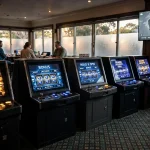
RTG identifies the game software, while the operator controls the account, customer service and site terms.

When you see “RTG” attached to an online casino or its games, it refers to RealTime Gaming, a software development company. It does not name the casino operator. That distinction is easy to miss: a casino may display a provider’s name prominently, but the provider and the business running the site are separate entities.
The short version is that RTG makes gaming software; a casino operator runs the service through which that software is presented. So “RTG online casino” is informal shorthand for an online casino that uses RTG software, not the name of a single casino company. Likewise, RTG pokies means pokies associated with the provider’s software, rather than a separate operator or a guarantee about the site where they appear.
I find it useful to keep those roles apart from the start. A familiar software label tells you something about who developed the games. By itself, it does not tell you who controls the casino account, handles customer service, or sets the site’s terms. Those are operator-side matters, not part of the meaning of RTG.
Choosing an RTG casino for Australia means weighing the details that matter to you before signing up. Use this shortlist as a starting point and check the current terms that apply to your play.
Roby Casino
Roby Casino is listed with a Curacao eGaming license held by Roby Games Ltd. You can use that licensing detail as a point of reference when considering it.
Golden Pokies
Golden Pokies is listed with a Curacao license. You can consider it on that stated basis, though no other operator details were provided.
Ricky Casino
Ricky Casino lists crypto payouts under an hour and PayID payouts in 1–3 business days. The minimum deposit is A$20, or A$30 to qualify for the bonus.
MrPacho
MrPacho lists crypto payouts in 30–120 minutes and fiat payouts in 24–72 hours. Its minimum deposit is A$30.
LevelUp Casino
LevelUp Casino is listed with Curacao eGaming license OGL/2023/174/0082, held by Dama N.V. Its minimum deposit is A$15.
Vegaz Casino
Vegaz Casino is listed with Curacao license OGL/2024/1335/0780. The stated minimum deposit is EUR 20.
SpinsUp
SpinsUp is listed with Curacao Gaming Control Board license OGL/2023/174/0082, held by Dama N.V. You can use the license information as its supplied point of reference.
Lucky Dreams
Lucky Dreams is listed with a Curacao license and has a stated minimum deposit of A$20 via POLi. Those details give you a licensing and deposit reference when assessing it.
Uptown Pokies
Uptown Pokies is listed with a Curacao license and is stated to have operated since 2017. Its minimum deposit is A$20.
Bizzo Casino
Bizzo Casino is listed with a Curacao Gaming Control Board license, with TechSolutions Group N.V. named in the supplied details. You can use that licensing information as a reference when considering it.
RealTime Gaming was founded in Atlanta, in the United States, in 1998. The company later relocated its operations to Costa Rica. That is the basic background behind the RTG name: it began as a US-founded software developer and subsequently moved its operations.
The company’s history helps explain why the label can appear across different casino sites. A software developer’s products may be used by businesses that are not owned or run by that developer. Seeing RTG on a game or in a site description is therefore not the same as seeing the name of the company responsible for the casino itself.
That separation matters more than it might seem. People often use “RTG casino” as though it were one neatly defined product. In practice, the phrase points to a connection with the software provider, while the casino remains a different business. The wording is convenient; it can also blur who is responsible for what.
Think of the label as identifying the source of the software, not the whole service. RTG is the provider. The operator is the business presenting the casino site to its customers. A site can feature RTG software without being RealTime Gaming itself, just as a software brand on a product does not automatically identify the shop selling it.
That is the useful distinction behind searches for an RTG online casino or RTG mobile casino. The wording may describe a casino site that offers software from RTG, including access through a mobile device. It does not establish that RTG operates the site, nor does it make different sites interchangeable. The provider label is one piece of information, not a complete description of the business behind a particular service.
 Wazdan Casinos in Australia: What to CheckLearn how to assess Wazdan slots and offshore casino offers, from paytables and game features to bonus conditions and withdrawal terms.
 GameBeat online casinos in Australia: bonus rulesUnderstand bonus wagering, eligible slot play and offshore limits, including why slots may count fully while promotion rules still decide which games…
The same goes for references to RTG online slots or RTG pokies. Those phrases identify a software connection. They do not tell you who owns the site, what rules apply to an account, or whether a particular operator is trustworthy. Treating the label as an endorsement would give it a job it cannot do.
And in Australia, the terminology should not be mistaken for an invitation or recommendation to play. The label explains a software relationship; it does not change the status of an online casino service or make a site locally protected.
If you encounter RTG in a site description, read it narrowly. It can indicate that the site offers games developed by RealTime Gaming. It cannot, on its own, establish the identity or reliability of the operator. Nor does the phrase “best RTG online casino” describe one official RTG-run destination: it is a broad label people use for separate casino businesses linked by the software they offer.
That distinction is especially relevant when several sites use the same provider. Shared software does not mean shared ownership or shared responsibility. The operator remains the business you would be dealing with on that site. The provider’s name and the operator’s name answer different questions.
I would keep the mental shorthand simple: RTG tells you about the developer; the casino name tells you which operator is presenting the service. Don’t merge them.
A directory of casinos associated with RealTime Gaming tells you something about their software, not whether the businesses behind them are dependable. That distinction is easy to miss when several entries share the same provider label. It is also the main reason a directory should not be read as a quality ranking.
The provider and the operator do different jobs. The provider supplies games; the operator runs the gambling website and sets its own account, payment and customer-service rules. Two sites can therefore use the same software while offering very different experiences and levels of accountability. A familiar label is not a reference check.
A list can help identify which operators say they use RTG software. It cannot, by itself, establish that every entry is reliable, that a site’s terms are fair, or that a player will be able to resolve a dispute. Treat inclusion as a description of an association, not an endorsement.
The same applies to labels such as “complete” or “full”. A directory can only reflect the entries it has collected and the information available to its publisher. Sites may change their software, terms or ownership, and a list can become dated. No heading can turn a changing collection into a guarantee.
I would separate three questions when reading one: does the operator identify RTG as a provider; who is responsible for the site; and what oversight, if any, applies to that operator? The first question concerns software. The others concern the business you would be dealing with. Mixing them together is how a technical label starts doing work it cannot do.
 NetEnt Casinos in Australia: Games and ChecksLearn what a NetEnt casino label means, how to check games, bonuses and withdrawals, and why Australia has no domestically licensed real-money…
 Platipus Online Casinos in Australia: What to CheckLearn how to assess the operator, bonuses and wagering rules at casinos offering Platipus games. The Interactive Gambling Act 2001 bars Australian…
Casinos using RTG software are independently licensed, and the quality and trustworthiness of operators can vary. That means there is no single licence or common standard that automatically covers every site in a directory. A provider’s name does not certify the operator’s conduct, and a licence mentioned on a website is not, on its own, proof that all concerns are settled.
For an Australian reader, there is a further boundary: a foreign licence does not make an online casino’s real-money offer lawful in Australia. The Interactive Gambling Act 2001 prohibits operators from providing online casino games to people in Australia. So an operator’s offshore oversight should not be mistaken for local approval or local consumer protection.
Australian players have minimal or no protection under Australian consumer law for transactions with offshore casinos. If a dispute arises, local legal protection is not available in the way it would be for an Australian-regulated service; recourse is typically through a complaint to the foreign regulator. That is a significant difference, not a footnote. ACMA also blocks access to illegal gambling sites and maintains a growing blacklist, so availability can change.
A directory does not settle whether a particular operator is trustworthy, nor does it remove the practical and legal risks of offshore gambling. It is not a substitute for understanding who operates a site or what protections apply—and in Australia, it should not be read as an invitation to use one.
Keep the categories straight: the software label describes a provider relationship; the operator’s own arrangements determine how that website is run; and neither point overrides Australia’s restrictions. That is the useful reading of an RTG casino directory. Anything stronger needs evidence beyond a shared logo or provider name.
Legal Risk
Foreign licences do not make real-money online casino offers lawful in Australia, and players have minimal or no protection under Australian consumer law for offshore transactions.
RTG’s catalogue covers more than one kind of game. Alongside online pokies, it includes video poker, table games whose outcomes are generated by a Random Number Generator (RNG), and a group of smaller-format games: scratch cards, keno, craps and bingo. That range matters when you see RTG casino software mentioned. It identifies a provider whose games span several familiar formats; it does not mean every casino using the software has the same selection.
Online pokies are the most recognisable part of the catalogue, but they are only one category. A particular RTG slot game is still a game with its own rules and presentation, rather than a description of the whole platform. The label can be useful when you are trying to understand what software a casino offers, but it tells you little on its own about the rest of the game menu.
Video poker sits between poker-style decisions and a machine-based game format. The name distinguishes it from a live table: the game is presented digitally, and its outcome relies on the software rather than a person dealing cards. RTG’s RNG table games are also digital, but follow table-game formats. The category includes games such as craps, while the wider portfolio also includes games with different structures, such as keno and bingo.
Scratch cards are another distinct format, with a simpler reveal-style structure. These categories make the portfolio broader than a list of RTG slot machines might suggest. If you prefer to see the whole range before focusing on a particular type, look at the categories shown in the casino’s lobby rather than assuming the provider’s name describes every title available. Menus can differ between operators.
 Microgaming Online Casinos in Australia: What to CheckLearn how to check Microgaming game availability, slot eligibility, wagering contribution and maximum-bet rules before playing; not every lobby title qualifies.
 Playtech Online Casinos in Australia: What to CheckLearn what a Playtech label verifies—and what it doesn’t, from game availability and demo access to casino terms, bonuses and real-money checks.
The shared technical point is the RNG. RTG’s games use a certified Random Number Generator, and independent testing agencies audit it; Technical Systems Testing (TST) is one named example. In plain terms, an RNG is the system used to generate game outcomes in software. An audit is an independent check of that system, not a promise that a particular session will go well or that a player will receive a particular result.
That distinction is worth keeping in mind when you see claims about an RTG slot machine or another game in the portfolio. The audit applies to the game-generation system; it does not turn the provider label into a rating of an operator, nor does it tell you which game format will suit you. A certification is technical context, not a prediction. Dry, but useful.
The same distinction applies when you encounter phrases such as “RTG slots free” or “RTG slot demo”. They refer to ways a game may be presented, not to separate categories in the provider’s broader portfolio. RTG games support both demo play and real-money play, but the available mode depends on how a game is offered. The game type and the play mode are different things.
So, the neat way to read the catalogue is to separate three ideas: the provider, the game category and the individual title. RTG is the software provider; pokies, video poker, RNG table games and specialty games are categories; each title belongs within one of those groups. Once those are not blurred together, a provider label becomes a more useful description of the software behind a game, rather than a shortcut for judging everything around it.
The most recognisable part of the catalogue, including various slot titles.
Digitally presented games, including video poker and RNG-based table games like craps.
Smaller-format options such as scratch cards, keno, and bingo.
The key distinction is between the operator and the person trying to access a site. Under the Interactive Gambling Act 2001 and its amendments, an online casino operator cannot legally offer casino games to people located in Australia. That applies whether the games are supplied by RealTime Gaming or another provider, and whether the operator is based offshore. A foreign licence does not override Australian law.
Australian players are not explicitly criminalised simply for accessing an offshore casino site. That is a narrow point, not a green light. The rules restrict operators from providing these services to people in Australia; they do not turn an offshore site into a locally authorised service or give you the safeguards that come with dealing with a domestic provider.
The Australian Communications and Media Authority (ACMA) works to block access to illegal gambling sites and maintains a blacklist that continues to grow. As a result, a site that loads today may become inaccessible later. A block is part of enforcement against the service, not proof that a site has been assessed as safe or that a player has gained legal protection.
That practical difference matters if you are researching RTG casinos from Australia. The software label tells you about the games’ provider; it does not change the operator’s legal position or make the service available under Australian law. Nor does being able to open a page settle whether the operator is permitted to serve Australian customers. Access and legality are separate questions.
 Betsoft Online Casinos in Australia: What to CheckLearn how slot wagering contribution is generally treated, and why a provider label alone cannot confirm a game's classification or availability.
 KA Gaming Online Casinos in Australia: What to CheckLearn how to assess KA Gaming slot listings, distinguish game claims from evidence, and check demos, bonus terms, deposits and payouts before…
If a withdrawal, account closure or other dispute arises with an offshore casino, you do not have local Australian legal protection for that transaction. Recourse is typically to complain to the regulator in the jurisdiction where the operator is licensed. That route is not the same as having an Australian body resolve the matter for you, and it may not produce a result.
Before taking any step involving an offshore site, keep that gap in mind. The familiar appearance of a website, the presence of RTG games, or a foreign licence does not create Australian consumer-law protection. If something goes wrong, your options may depend on a foreign regulator’s processes. That is a material limitation, not fine print.
I would keep the practical picture simple: the law bars operators from offering online casino games to people in Australia; players are not explicitly criminalised for accessing offshore sites; and ACMA blocks illegal services. None of those points amounts to an endorsement of offshore play. No local safety net.
So if you see claims about the best RTG casino for Australians, read them against this legal setting rather than as evidence that a site is authorised here. A list, review or operator statement cannot change the legal status of the service. For Australian readers, the important question is not only what software a casino uses, but whether the service can lawfully be offered in this market—and Australian law says operators cannot offer these games to people here.
When you compare RTG pokies, three terms can help explain why two games may feel very different: jackpot, volatility and return to player, or RTP. They describe aspects of a game’s payout design, not a promise about what you will win. I’d keep that distinction in view before reading too much into a headline feature.
Progressive RTG titles tend to have a lower RTP than comparable non-progressive titles because a portion of each bet funds the jackpot.
A progressive jackpot grows as contributions from bets are added to a prize pool. Many RTG pokies have this feature, but the jackpot is not simply an extra prize with no effect on the rest of the game. A specialist review reports that progressive RTG titles tend to have a lower RTP than comparable non-progressive titles, because part of each bet goes towards funding the jackpot. That is a trade-off: a larger potential prize is paired with a different return structure.
RTP is a theoretical measure of how much a game returns across extensive play, rather than a forecast for one person’s session. It cannot tell you when a win will arrive, whether a particular spin will pay, or how much you will leave with. Even if two games show similar RTP information, their payout patterns can still feel quite different. The figure describes an overall model; it does not smooth out the ups and downs you experience while playing.
Volatility is about those ups and downs. A high-volatility game tends to produce larger payouts less often. That can mean longer stretches without a notable win, followed by the possibility of a bigger payout. It does not mean that a large win is due after a dry spell. Each result remains uncertain, and past spins do not make the next one more likely to pay.
This is where RTP and volatility are easy to muddle. RTP concerns the theoretical return over a large number of plays; volatility describes how payouts may be distributed along the way. A game can have an appealing-looking theoretical return and still feel tough in a short session if its payouts are infrequent. Conversely, frequent small wins do not necessarily mean a game has a higher RTP. Different measures, different questions.
For a jackpot game, check whether the prize is progressive and read the RTP information for that particular title if it is provided. Do not assume that every RTG game shares the same return or payout rhythm. The software label identifies the provider, not a single set of mechanics across all its games.
I would also avoid treating “best” as a universal category here. A jackpot-focused game may suit someone drawn to the possibility of a larger prize; someone else may prefer a less uneven pattern. Neither preference changes the underlying uncertainty, and a game’s features cannot make a session reliably profitable.
The practical point is modest: compare jackpot structure, RTP information and volatility as separate details, and treat each as description rather than prediction. A big prize can dominate the screen. The maths still matters.
RTG games support demo mode as well as real-money play. The two modes are not interchangeable: a demonstration lets you see how a game works, while real-money play involves stakes. Treat demo access as a way to inspect the interface and rules, not as evidence that a particular game pays well. It does not establish a title’s return rate or make it one of the “loosest” options.
I’d also separate trying a game from accepting a promotion. Free spins may look like a simple extra, but the balance they produce can be subject to conditions that change what you can withdraw. A specialist review reports that free-spin winnings are often credited as bonus funds, with separate wagering requirements and a maximum withdrawal cap. Those conditions can differ between offers, so the promotion’s own terms are what matter.
Look for how the casino classifies winnings from free spins. If they are bonus funds, check whether you must meet a wagering requirement before withdrawing, which games count toward it, and whether there is a cap on cashing out those winnings. A cap can limit the amount you receive even after you have completed the stated conditions. If any rule is unclear or scattered across separate terms pages, don’t assume the more generous interpretation.
The percentage of wagering credited by a game can also matter, but no universal contribution rate should be assumed for a specific promotion. Read the promotion rules alongside the game restrictions. A game available in demo mode may not qualify toward a bonus requirement, and a game that does qualify may count differently from another. The operator’s written conditions should settle that point.
No-deposit bonuses have their own conditions too. A specialist review reports that winnings from these offers can be withdrawn when the applicable wagering requirements have been met, but the offer’s terms still determine eligibility. Check whether verification or other stated conditions apply before treating a displayed balance as cash you can withdraw.
If you are comparing free-play options, focus on what can actually be verified: whether demo mode is available, how the game functions, and what the promotion terms say about any resulting bonus balance. A demo session cannot tell you that a game is among the best-paying RTG titles or has the highest return. That depends on information specific to the title, not on the fact that it can be tried without a real-money stake.
The practical distinction is simple: demo mode is for seeing the game; promotional spins come with rules. Read those rules before accepting an offer, and don’t count bonus funds as withdrawable winnings until the conditions say they are.
Payment options and cash-out rules are set by the casino operator, not by RTG. That distinction matters: a game provider’s name tells you nothing about how an operator handles a deposit, verifies an account or releases a withdrawal. I would read the cashier terms before treating any advertised payment method or processing time as dependable.
A specialist review describes Bitcoin (BTC) and Tether (USDT) as the most widely accepted payment methods at casinos aimed at Australians. That is a report of what the review found, not a promise that a particular operator accepts either currency. Check the cashier directly, including any network or currency restrictions, before sending funds. Crypto payments can also leave you with little practical recourse if a transfer goes to the wrong address.
The withdrawal clock has more than one part. A specialist review says casino approval for a first cash-out can take from minutes to 48 hours, and notes that enhanced identity checks may be requested. The operator’s review process is separate from the time a payment takes to arrive. A further specialist review describes crypto withdrawals as being processed by the casino within 24 hours, while bank transfers can take 5–10 business days. Those are reported timings, not guarantees for every account or payment.
Crypto withdrawals are described as being processed by the casino within 24 hours, while bank transfers can take 5–10 business days. Initial cash-out approvals can range from a few minutes to 48 hours.
Pay attention to the pending period as well. A specialist review characterises 24–48 hours as a standard withdrawal-pending window and anything longer as a warning sign. During that period, a request may not yet have been sent to the payment provider. If the terms give a different schedule, or the operator asks for documents, the actual wait can differ. Keep a copy of the cashier rules and any messages about a request; it is easier to follow a delay when you can see which stage it has reached.
A quick approval is not the same as a protected transaction. Australian players have minimal or no protection under Australian consumer law for offshore casino transactions. If a dispute arises, local legal protection is not available; recourse is typically a complaint to the foreign regulator, where one applies. That is a thin safety net.
So, when you see claims about real-money play at an RTG casino, separate the software label from the operator’s payment terms. Read the withdrawal conditions, verification requirements and stated processing stages together. If those details are unclear, you cannot sensibly judge how a cash-out would work. The fine print is the whole point.
A bonus can make the balance on an account look larger without making the same amount available to withdraw. The key is to separate cash from promotional credit and read the conditions attached to each before accepting an offer. Terms can specify which games count toward wagering requirements, how much each game contributes and what happens to bonus funds when you request a payout.
Game contributions are not necessarily equal. Pokies typically count at 100% toward wagering requirements, while blackjack and roulette may count at only 10% or not count at all. So a balance built up while playing one game may make little progress toward clearing a bonus if that game has a low contribution. Check the eligible games and contribution table in the terms; the headline offer alone will not tell you how much qualifying play is required.
A sticky bonus has a different catch. It is play-only credit, not withdrawable cash, and the casino deducts it from the balance when you make a withdrawal. If the displayed balance combines your funds and sticky credit, the amount shown may therefore be higher than the amount you can take out. That distinction is worth understanding before you accept the bonus, not when you are already trying to cash out.
Licensing is another separate question. RTG casinos typically hold a Curaçao licence, but casinos using the same software may be licensed independently, and their oversight and trustworthiness can differ. The software label does not tell you who operates a site or establish that every operator follows the same rules. Nor does a foreign licence make an offshore casino locally regulated in Australia.
For Australian players, the legal position matters: operators cannot legally offer online casino games to people in Australia. Players are not explicitly criminalised for accessing offshore sites, but offshore casino disputes do not come with local Australian legal protection; recourse is typically a complaint to the foreign regulator. You also have minimal or no protection under Australian consumer law for transactions with an offshore casino. A licence should not be mistaken for a local safety net.
Attention: A sticky bonus is play-only credit and is deducted from your balance during withdrawal, meaning the displayed balance may be higher than the amount you can actually cash out.
I would treat the bonus terms and licensing details as distinct checks. Read the wagering contribution rules, confirm whether any credit is sticky, and identify the operator and regulator named in the site’s terms. If those details are unclear or inconsistent, the bonus headline will not resolve the uncertainty. No shortcut here.
A game being labelled “new” tells you very little on its own. It may be newly added to a casino’s catalogue rather than a recent release from RealTime Gaming (RTG), and the label does not establish how the game works. I’d start with details that can actually be checked: the provider attribution, the game category and the information about its random number generator.
RTG’s catalogue spans more than online pokies. Its games also cover video poker, table games decided by an RNG, and specialty formats including scratch cards, keno, craps and bingo. So first make sure the title is being described in a way that fits one of those documented categories. A category label is a useful point of comparison, not proof that every other claim about the game is accurate.
The RNG is another concrete detail. RTG games use a certified Random Number Generator, with independent testing agencies such as Technical Systems Testing (TST) auditing it. If a listing says a game is an RTG title, look for clear provider identification and information tying the game to that audited system. Don’t treat vague wording about fairness as equivalent to those details.
There is a limit to what these checks tell you. An audited RNG concerns the generation of game outcomes; it does not verify a casino operator, its policies or its claims about a particular title. Those are separate matters, and a fresh catalogue entry does not settle them. The label “new” is not evidence.
I would also avoid guessing from a promotional description. If it does not clearly identify the provider or explain what kind of game it is, there is little solid ground for comparing it with other RTG releases. No need to fill the gaps with hype.
For Australian readers, this is a way to assess information about a game, not an endorsement or an invitation to use an offshore casino. Online casino games cannot legally be offered to people in Australia, and offshore transactions carry minimal or no protection under Australian consumer law. A factual description is useful; it does not change that position.
For recreational gamblers in Australia, gambling winnings are generally not taxed. That applies as a broad tax principle, not as a special rule for one game or software provider. If you play casually, a win is generally treated differently from ordinary earnings.
I’d keep the wording “generally” in mind. It describes the usual treatment of recreational gambling winnings; it is not a personal tax assessment or a promise that every situation will be handled identically. If gambling is part of a business or your circumstances are unusual, get advice from a qualified Australian tax professional rather than assuming the recreational rule settles your case.
It also helps to keep tax separate from other questions. A tax treatment does not make an offshore casino authorised to serve people in Australia, and it does not give you local protection if a dispute arises. Australian players have minimal or no protection under Australian consumer law for offshore casino transactions. Tax and consumer recourse are different matters.
You do not need to turn a general tax rule into a reason to chase a win. I’d treat any money won as uncertain, keep personal records if you need them for your own finances, and check current advice if your circumstances change. A headline saying that gambling winnings are generally untaxed is not a substitute for advice about your specific position.
The practical takeaway is narrow: recreational gambling winnings are generally not taxed in Australia. That statement is about tax only. It should not be read as an endorsement of offshore play, a guarantee about an individual’s tax outcome, or assurance that a casino will pay a disputed balance. Keep those distinctions clear.
Australian law makes it illegal for online casino operators to offer casino games to people in Australia, but Australian players are not explicitly criminalised for accessing offshore sites. ACMA blocks access to illegal gambling sites, and players have no local Australian legal protection for disputes with offshore casinos.
The law prohibits operators from offering online casino games to people in Australia, although Australian players are not explicitly criminalised for accessing offshore sites. The RTG label identifies the software provider; it does not make a casino locally authorised or protected.
You can typically file a complaint with the casino’s foreign regulator. Offshore casino disputes do not have local Australian legal protection.
Yes, RTG games support demo play, so you can try them without playing for real money.
Yes, RTG games can be played for real money, and winnings may be withdrawn subject to the casino’s terms. Bonus winnings can have wagering requirements or withdrawal caps.
Check who operates the site and what licence or oversight applies to that operator; the RTG software label alone does not establish reliability. Casinos using RTG can be independently licensed, so standards vary, and a directory listing is not an endorsement.