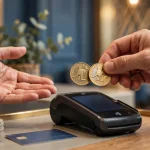
PayID can simplify transfers, but it does not verify an operator or change the rules on real-money online casino games in Australia.

PayID is familiar in Australia as a way to send money using an identifier such as a mobile number or email address, rather than entering a set of bank details for each transfer. It runs through the New Payments Platform (NPP), which connects participating banks for quick payments. That can make a transfer feel straightforward. It does not make every place offering PayID a safe or lawful place to send money.
The distinction matters if you are looking at claims about PayID pokies or real-money play. A payment method describes how funds may move; it does not tell you what service is receiving them. Seeing PayID mentioned on a page is not proof that the operator is licensed, that its games are fair, or that it will return money when requested. Nor does a familiar Australian payment option turn an offshore gambling service into a locally authorised one. Payment access is not a trust mark.
There is a separate legal issue here. Under the Interactive Gambling Act 2001, it is illegal for operators to provide real-money online casino games to people physically located in Australia. That includes pokies, along with other casino-style games. A page may use Australian wording, display prices in Australian dollars or describe its payment process in local terms; none of those details changes the rule. The law concerns the service being provided, not whether the payment screen looks familiar.
So when you see “instant” attached to a real-money PayID offer, read it as a claim about a transfer mechanism, not a guarantee about the whole experience. PayID is built for fast bank-to-bank payments, but the speed of a payment does not establish what happens before or after it reaches a casino account. More importantly, it says nothing about the legal status of the gambling service. Quick is not the same as approved.
There is another practical point: a confirmed PayID transaction is irreversible. Once you authorise and confirm a transfer, you cannot treat it like a card payment that might simply be cancelled later. That makes it worth pausing before sending money, especially where a site’s identity, terms or claims are unclear. A polished cashier page can make a transaction feel routine. The transfer itself is still a deliberate payment to the recipient shown.
I would keep three questions separate. First, what does PayID do? It lets a user send money using a registered identifier through Australia’s fast-payment network. Second, what does the recipient offer? That needs to be judged independently of the payment method. Third, is the service lawful for people in Australia? For real-money online casino games, the Australian legal position is clear: operators may not provide them to people here. Mixing those questions is how a payment logo gets mistaken for a seal of approval.
The wording around real-money play can also blur the line. A page might say “PayID pokies Australia” or present a deposit route as if it were just another everyday purchase. But putting an ordinary payment method beside gambling language does not make the underlying activity ordinary or locally permitted. If you are physically in Australia, the relevant point is not whether a transfer can technically be made; it is that online casino operators are prohibited from supplying real-money casino services to you.
Legal Warning
Under the Interactive Gambling Act 2001, it is illegal for operators to provide real-money online casino games, including pokies, to people physically located in Australia.
That does not mean PayID itself is a gambling product. It is a general payment system used for transfers, and its presence in other contexts is separate from the legal status of an online casino. Keep the tool and the use apart. A bank transfer can be legitimate in one setting and still be used in connection with a service that is not lawful to offer here. The payment rail does not decide the question.
I would not read “real money,” “instant” or “PayID accepted” as reassurance. They describe, at most, the kind of transaction a page claims to support. They do not verify the operator, its conduct or its authority to serve Australian residents. If a page leans heavily on speed and convenience while skipping the nature of the service, that is a reason to slow down rather than a reason to proceed.
PayID can make money move quickly. The Australian caution is that a simple transfer does not make real-money online pokies lawful, reliable or endorsed. Keep those facts apart before you act. Payment convenience is not permission.
When looking at online pokies with PayID in Australia in 2026, check each operator’s available payment and licensing information before deciding whether it suits you. The notes below highlight only the details provided for each one.
Roby Casino
Roby Casino is listed as licensed by Curacao eGaming, with Roby Games Ltd named as the license holder.
Golden Pokies
Golden Pokies is listed with a Curacao license.
Ricky Casino
Ricky Casino lists PayID withdrawals at 1–3 business days and crypto withdrawals in under an hour. Its minimum deposit is A$20, or A$30 to qualify for the bonus.
MrPacho
MrPacho lists crypto payouts at 30–120 minutes and fiat payouts at 24–72 hours. The minimum deposit is A$30.
LevelUp Casino
LevelUp Casino lists a Curacao eGaming license, OGL/2023/174/0082, held by Dama N.V. Its minimum deposit is A$15.
Vegaz Casino
Vegaz Casino lists Curacao license OGL/2024/1335/0780. Its stated minimum deposit is EUR 20.
SpinsUp
SpinsUp lists a Curacao Gaming Control Board license, OGL/2023/174/0082, held by Dama N.V.
Lucky Dreams
Lucky Dreams lists a minimum deposit of A$20 for POLi.
Uptown Pokies
Uptown Pokies is listed as operating since 2017 and holding a Curacao license. Its minimum deposit is A$20.
Bizzo Casino
Bizzo Casino is listed as licensed by the Curacao Gaming Control Board, with TechSolutions Group N.V. named.
A PayID badge can tell you something narrow: a payment route is being presented. It cannot tell you whether a real-money casino service is lawful for people in Australia, whether its games are fair, or whether it will pay winnings. Those are separate questions, and a payment logo does not answer them.
That distinction matters when a page describes its picks as the best PayID pokies. “Best” can sound like a verdict on the whole service, when the comparison may be based on little more than whether a deposit option appears. I would not treat that as a meaningful measure of safety or quality. Fast money movement is a feature of the payment rail, not a character reference for the business using it.
PayID transfers at online casinos are described as completing within seconds. That may make the deposit side feel straightforward, but speed does not verify what happens after the money arrives. It says nothing about the operator’s legal status, game fairness, withdrawal decisions or customer support. A transfer can work exactly as designed while the service behind it remains a different matter.
The same goes for fees. PayID itself does not charge a transfer fee, and reputable venues do not add a separate charge for PayID deposits or withdrawals. But a fee-free transfer is not proof that a venue is reputable. Nor does the absence of a payment fee establish that the overall terms are fair. Keep the payment detail in its lane.
There is a more basic issue here than ranking payment options. Under the Interactive Gambling Act 2001, operators cannot lawfully provide real-money online casino games, including pokies, to people physically located in Australia. A foreign licence, if one is claimed, does not turn that service into a locally authorised casino. PayID acceptance does not change that legal position.
So I would be wary of treating a “best” label as permission, reassurance or a recommendation. It is not. A site’s ability to display a payment method, or to receive a transfer, is not evidence that it is licensed to provide online casino games in Australia. Payment access and legal authority are different things.
That does not mean the payment method itself is a test of fairness. PayID is a way to move money between accounts through Australia’s payment infrastructure. It does not inspect a game’s rules, check its return settings, or decide whether a casino should release a withdrawal. Those matters cannot be inferred from the method used to deposit.
The same applies to transparency. A page can describe a service as a top choice and mention convenient payments, but those claims do not show what the game pays back or how disputes are handled. A polished payment page is still a payment page. It is not an independent assessment of every part of the service.
A payment logo indicates a presented payment route, but it does not verify an operator's legal status, game fairness, or authority to serve Australian residents.
A PayID pokies list might tell you which services claim to support PayID at the time the list was prepared. Even that detail can change, so a general list is not confirmation of what a particular cashier currently offers. More importantly, listing payment availability does not turn the entries into safe or lawful choices for Australian residents.
I would separate a few ideas that often get bundled together: whether a payment option is displayed, whether a transfer can be made, whether the operator may legally offer the service here, and whether the service is trustworthy. One does not prove the next. “It accepted PayID” is an observation about a transaction, not an answer to all those questions.
If a page uses “best” to mean best for you, look closely at what its comparison actually measures. If it only discusses payment speed or ease, then that is all the label supports. It cannot establish fairness or a willingness to pay winnings. And if it presents an offshore operator as a recommended option for Australians, the payment method does not resolve the legal problem.
I would not use PayID availability as a shortcut for choosing a real-money casino. It can describe a payment feature, but it cannot supply the assurance implied by a broad ranking. Dry distinction, but an important one.
PayID is linked to your Australian bank account through an identifier, such as a mobile number or email address. Transfers run through the New Payments Platform, which connects participating banks. For a payment to work as intended, the PayID details you enter need to match the PayID registered with your bank. A typo or an identifier linked to a different account can interrupt the process before the money reaches its destination.
There is another detail worth checking before you transfer: the name on your bank account should match the name on your casino profile. A mismatch can create problems when an operator checks an account or handles a payment. That is not a guarantee that every payment will go smoothly; it is simply one avoidable mismatch to rule out. Use your own bank account and your own PayID, and check both names carefully rather than assuming that a familiar email address or phone number is enough.
The Australian wrinkle is that your bank’s rules still apply. PayID is a way to move money between accounts; it does not override a bank’s acceptable use policies or require the bank to process every transfer. A specialist review reports that some Australian banks, including members of the Big Four, have at times blocked PayID transfers to gambling merchants they recognise. Treat that as a reported possibility, not a blanket rule about what every bank currently does. Policies and blocking decisions can change.
If a transfer is declined, do not assume that the problem is a faulty PayID or that retrying repeatedly will fix it. Check that you selected the correct identifier and that your bank account details are accurate. Then contact your bank through its official support channel and ask whether it declined the payment under its policies. Your bank is the party that can explain its decision; a payment label on a casino page cannot.
It also helps to keep the roles clear. Your bank manages the account and PayID registration. The receiving service supplies the payment details it wants you to use. Those are separate parts of the transaction, and an issue at either end may prevent it from completing. Do not send a transfer to an identifier simply because it was shared in a message or on social media. Check the details inside the relevant service’s own payment flow, and pause if they differ from what you were given.
PayID itself is not a signal that a merchant is approved by your bank, nor does a successful transfer tell you anything about the service beyond the fact that the payment went through. Payment access is not a substitute for checking the legal context. Under Australia’s Interactive Gambling Act 2001, providing real-money online casino games, including pokies, to people physically in Australia is illegal for operators. A bank transfer working does not change that rule.
That point matters because people can mistake a familiar bank-linked payment method for an endorsement. It is not. Banks may process one transfer and decline another, and neither outcome establishes that an online casino service is lawful, reliable or obliged to pay winnings. Keep the payment question separate from the legal one.
Before making any transfer, review the PayID identifier, your registered bank details and the account name associated with your profile. If your bank blocks a gambling-related payment, follow up with the bank instead of trying to route around its decision. And if the details do not match, stop and resolve that first. Small checks; fewer headaches.
If you are looking at PayID for a real-money deposit, separate the payment mechanics from the legal status of the service. Under the Interactive Gambling Act 2001, operators cannot lawfully provide online casino games to people in Australia. A payment option appearing on a page does not change that.
PayID is a bank-linked way to send money using an identifier such as a mobile number or email address. For a deposit, the casino’s cashier gives you payment instructions; you then make the transfer through your bank. The key practical point is that the transfer is not a card payment. Once you confirm a PayID transaction, it cannot be reversed. Treat the confirmation screen as the point of no return, not as a chance to fix a mistake afterwards.
Deposit minimums differ between operators. Most are reported to start in the AU$10–AU$20 range. A specialist review also reports that some operators allow a first deposit from AU$5, but that lower starting amount should not be assumed to apply to a particular cashier or remain available. Check the amount shown in the payment screen before you send anything.
The displayed minimum is only one part of the decision. Make sure the amount you enter is the amount you intend to send, and compare it with the instructions on the cashier page. If the payment details or requested amount do not match what you expected, stop and resolve that before confirming. A completed PayID transfer cannot simply be cancelled because you spotted an error a moment later.
Attention: Once you authorise and confirm a PayID transaction, it is irreversible and cannot be cancelled like a card payment.
There is no need to send more than the stated minimum just to test whether a payment route works. A small transfer is still a real transfer, and confirmation makes it final. Keep the transaction record from your banking app so you can identify the payment if you need to refer to it later. That record is useful for tracking what you sent; it does not make the payment reversible.
The amount you can send in a day is controlled by your bank’s PayID limit, not by a number that applies uniformly across Australia. A specialist review notes that the bank sets this daily ceiling. Check your own banking app or bank information rather than relying on an amount shown on a casino page: the cashier cannot tell you what limit your bank has set for your account.
If a transfer is declined or the amount would exceed your limit, do not keep changing figures at random. Check the bank’s instructions first. Your available limit may also affect whether a deposit can be sent in one transfer, so it is worth knowing it before you begin. A listed minimum does not override your bank’s controls.
Read the PayID details on the cashier carefully, then check the recipient identifier, amount and any reference information against the instructions shown. PayID transfers can move quickly, which is useful when the details are right and unforgiving when they are not. Do not treat speed as a substitute for checking.
If the cashier does not clearly show PayID as an available deposit method, do not assume that a general claim about PayID applies to that particular service. Payment options can vary, and an old page or promotional message is not the same as a current cashier listing. Check what is actually displayed before taking any further step.
The everyday rule is simple: confirm the method, confirm the amount, and only then decide whether to proceed. PayID does not offer the same reversal expectation people may associate with some card transactions. Once you approve the transfer, it is final. That is worth remembering before, not after, tapping confirm.
A payment logo can tell you what a site claims to accept; it cannot tell you whether you should trust the site. Before relying on a PayID claim, check the actual cashier rather than an advert, a social post or a page promising a list of PayID pokies sites. Payment options can differ between venues and may change, so the cashier is the practical place to confirm what is offered.
Then read the payment terms around that option. Check whether the site explains how deposits and withdrawals are handled, and whether it identifies any fees or conditions. PayID itself does not charge a transfer fee, but that does not prove a casino will never add its own charge. The wording on the site matters. If it is vague, or the cashier does not show PayID, do not treat a general claim about PayID pokies casinos as confirmation.
The larger check is the claimed licence. Find the licensing authority named on the site and see whether the operator’s details can be verified publicly through that authority. A badge or licence number printed in a footer is only a claim until it can be checked. If the issuer, operator name or status cannot be confirmed, you have no sound basis for relying on the claim.
There is an important Australian limit here: the Interactive Gambling Act 2001 prohibits operators from providing real-money online casino games, including pokies, to people in Australia. A foreign licence, even if genuine, does not make that service lawful to provide to Australians. Nor does a PayID listing change the legal position. Payment access is not a local licence, a fairness check or evidence that winnings will be paid.
I keep the checks separate: confirm what the cashier says, then verify what the site says about its licence, without treating either as a recommendation. Some specialist reviews describe PayID sites as having minimum deposits in a particular range, but that is not a reliable substitute for the terms displayed by the site itself. And a low entry amount is no trust test. Small print still counts.
If you cannot verify the payment claim or the licensing information, step back rather than filling the gaps with assumptions. A polished page is easy to make. Verification is the harder part.
A deposit minimum is the smallest amount a cashier will accept in a single transaction. It is not the same as a recommended budget, and a low threshold does not make a real-money service lawful or dependable.
A specialist review puts typical PayID minimum deposits in the AU$10–AU$20 range. The same kind of review notes that some operators may accept AU$5. Treat those figures as reported examples, not a promise about any particular cashier: payment rules can vary, and the amount shown at the time of a transaction is the one that matters.
That difference can be useful if you are comparing stated minimums. A lower starting amount means less is required to meet the deposit threshold; it does not mean you have to deposit that amount, or that a small deposit will produce a particular result. Keep the threshold separate from any decision about whether to spend at all. A minimum is a payment condition, not a sensible target.
There is also a legal point specific to Australia. Under the Interactive Gambling Act 2001, operators cannot lawfully provide real-money online casino games, including pokies, to people in Australia. A payment option or a small advertised minimum does not change that.
If you encounter a stated minimum, read it as a narrow cashier condition rather than a sign of quality. It tells you only what amount the service says it will accept through that route. It does not establish how a deposit is handled, whether other conditions apply, or whether the service is trustworthy. Keep the claim in proportion.
The practical distinction is simple: AU$10–AU$20 is the reported typical band, while AU$5 is a lower amount that some operators may allow. Neither figure should be treated as universal. Cashier terms can differ, and promotional wording may not describe the ordinary deposit threshold. Read the payment terms carefully and avoid assuming that a low entry figure settles anything beyond the minimum amount stated.
A small number can look reassuring. It is still just a number.
A PayID withdrawal has two separate stages: the casino’s review and the transfer to your bank. That distinction matters. A request can sit in the casino’s system before any money is sent, so a delay at that point is not necessarily a delay with PayID itself.
The casino checks the withdrawal internally, and its review process and your KYC status can affect when it approves the payment. If your identity or account details still need attention, the request may not move on until those checks are settled. Keep an eye on the withdrawal status and any messages asking you to provide information; a pending request has not yet reached the bank-transfer stage.
Timings vary by operator. A specialist review describes casino-side pending periods of 24–72 hours before funds are released. That is a reported range, not a promise for every venue. The same type of review puts the PayID transfer after approval at 12–24 hours, with the combined wait from requesting a withdrawal to receiving it sometimes extending to 2–4 days. Treat those figures as an indication of how the two stages can add up, rather than a deadline.
Once approved, the casino initiates the transfer through PayID. A specialist review says approved transfers may arrive within the same day, but the venue’s processing and your account checks remain part of the overall wait. “PayID is quick” does not mean the casino has approved your request. Small distinction, big difference.
If the status has not changed, check whether the casino is still reviewing the request or has marked it as approved. If it says approved but the funds have not arrived, contact the casino with the withdrawal details and ask when it was sent. That helps separate an internal hold from a transfer that has already left the casino’s system.
Before requesting a payout, make sure the account details required by the casino are in order and that any identity checks are complete. A PayID withdrawal is not a single instant event: the casino decides when to release it, then the payment moves to your bank.
A “free credit” is not the same as cash in your bank account. It is a promotional balance governed by conditions, and a displayed amount does not tell you whether you can withdraw it. Before accepting any offer connected with PayID pokies, read the full terms: what play is required, which games count, whether winnings are capped, and what happens if you break a condition.
One specialist review reports wagering requirements of 30x–45x the bonus amount. Treat that as a reported range, not a rule that applies to every offer. The terms for a particular promotion are what matter. Check whether the requirement applies to the bonus alone or to a combined bonus and deposit, and whether the site sets a deadline or excludes certain games. If the wording is unclear, don’t assume the friendliest interpretation.
Some specialist reviews report wagering requirements of 30x–45x the bonus amount. This means the bonus amount must be played through 30 to 45 times before it can be withdrawn, subject to the specific site's terms and game exclusions.
Pay close attention to the maximum bet while wagering. Exceeding the stated limit can void the bonus and associated winnings. That can turn a small, casual spin into a dispute over the balance, so check the limit before playing rather than after a win.
I’d also separate the payment method from the promotion. PayID describes how a transfer is made; it does not make a credit withdrawable, validate an offer, or establish that a service is lawful or trustworthy. In Australia, real-money online casino services are prohibited under the Interactive Gambling Act 2001. A bonus does not change that.
The practical test is simple: understand the conditions before you accept anything, and don’t treat promotional credit as money you already own. If the offer relies on vague wording or hides key limits, leave it alone. No bonus is worth guessing over.
If you are checking whether a particular site lists PayID, go straight to its cashier or payment page before creating an account. Look for PayID among the deposit methods, rather than relying on a general banner or a page that simply mentions PayID pokies. Payment options can differ between sites, and a broad claim does not confirm what that cashier currently offers.
Check the details on the payment page, too: does it clearly identify PayID as a deposit option, and does it state the minimum deposit attached to that method? A specialist review has reported minimums of A$10 to A$30 at sites it describes as reputable, but that range is not a rule for every site. The cashier is the place to confirm the amount that applies there.
If PayID is absent from the cashier, do not assume it will appear after you register. If the page is unclear, treat availability as unconfirmed rather than taking promotional wording as proof. Keep the distinction simple: a site may mention PayID without showing that it is currently available as a payment method.
There is a more important Australian context. Under the Interactive Gambling Act 2001, operators are prohibited from providing real-money online casino games, including pokies, to people physically in Australia. A payment option does not change that legal position. So this check is not a recommendation to sign up or deposit; it only shows how to verify a payment claim.
Cashier first. Claims second.
A Facebook post mentioning PayID and pokies is not proof that a casino is lawful, that it accepts PayID, or that a promotion will pay out. A page can repeat a payment claim without showing what appears in a cashier or what conditions apply. Treat the post as an unverified claim, not as a recommendation.
There is a more basic Australian point: the Interactive Gambling Act 2001 prohibits operators from providing real-money online casino games to people in Australia. A social media promotion does not change that.
If you encounter a bonus claim, read the terms rather than relying on the headline. A specialist review reports wagering requirements of 30x–45x the bonus amount; that is a reported range, not a rule for every offer. Check what amount the multiple applies to, which games count, and whether a maximum-bet condition applies. Exceeding a bonus maximum bet can void the bonus and associated winnings. Fine print matters.
Do not assume that a Facebook-linked PayID claim tells you anything about the payment method’s availability or the operator’s conduct. Nor does a polished post make an offer dependable. If the conditions are hard to find, unclear, or inconsistent with the promotion, that is reason to pause—not to guess what the small print means. A catchy post is still just a post.
No. Operators are prohibited from providing real-money online casino games, including pokies, to people physically in Australia; using PayID does not change that.
After casino approval, PayID transfers usually arrive the same day, often within 12–24 hours. Including the casino’s review or pending period, the total can typically be 2–4 days.
A PayID option or badge does not prove that a casino is safe, fair or authorised to serve Australians. PayID is only a payment method, and real-money online casino services are prohibited for people in Australia.
Typical minimum PayID deposits are A$10–A$20, though some operators accept as little as A$5. PayID itself does not charge a transfer fee.
Some sites advertise PayID deposits, and some accept transfers starting at around A$10–A$20. However, offering PayID does not make a real-money online casino service lawful for people in Australia.
Some operators support PayID withdrawals, but that does not make their real-money online casino services lawful for people in Australia. PayID withdrawals are reviewed by the casino before funds are sent.
Typical minimum deposits are A$10–A$20, while some operators accept A$5. PayID itself does not set the deposit minimum.