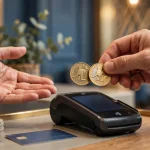
Bank-linked casino payments can use different routes, from account-detail wires to PayID identifiers and deposit-focused POLi.

“Bank transfer” can describe several different ways of moving money, and they are not interchangeable. When a payment menu uses the term, it might mean a conventional bank wire, a bank-linked payment service such as PayID, or a deposit option such as POLi. The money may start in a bank account in each case, but the payment route and the information you use are different.
That distinction matters when you are trying to understand a payment label. A direct wire is a bank-to-bank transfer using account details. PayID is a service connected to the New Payments Platform, where a payment is addressed using an identifier rather than only an account number. POLi is another bank-linked option, but it is mainly used for deposits; do not assume it can also handle withdrawals.
A bank wire is the most literal version of a bank transfer. To arrange one, you need the receiving business’s name and bank account number, along with the bank’s name. Depending on the transfer, the payment instructions may also call for a SWIFT, BIC or IBAN code. Those are details for identifying the receiving bank or account, not alternative names for PayID.
If you’re looking for an instant bank transfer casino in Australia in 2026, check the available payment methods and their processing times before you deposit. Use these operator notes as a starting point, not as confirmation that instant transfers are supported.
Roby Casino
You can note Roby Casino’s stated licence: Curacao eGaming, held by Roby Games Ltd.
Golden Pokies
Golden Pokies is listed with a Curacao licence. No payment methods or transfer times are specified here, so check those details before depositing.
Ricky Casino
You can deposit A$20, or A$30 to qualify for the bonus. Crypto payouts are listed as under 1 hour, while PayID payouts take 1–3 business days.
MrPacho
MrPacho lists a A$30 minimum deposit. Its stated payout times are 30–120 minutes for crypto and 24–72 hours for fiat.
LevelUp Casino
You can note LevelUp Casino’s Curacao eGaming licence, OGL/2023/174/0082, held by Dama N.V. Its minimum deposit is A$15.
Vegaz Casino
Vegaz Casino lists Curacao licence OGL/2024/1335/0780 and a minimum deposit of EUR 20.
SpinsUp
You can note SpinsUp’s Curacao Gaming Control Board licence, OGL/2023/174/0082, held by Dama N.V. Payment methods and transfer times are not specified here.
Lucky Dreams
Lucky Dreams lists POLi with a minimum deposit of A$20. Check the operator’s payment information for any transfer timing details.
Uptown Pokies
Uptown Pokies is listed as operating since 2017 and holding a Curacao licence. Its stated minimum deposit is A$20.
Bizzo Casino
Bizzo Casino is listed with a Curacao Gaming Control Board licence held by TechSolutions Group N.V. No payment method or transfer-time details are specified here.
The transfer can be arranged through different banking channels: at a branch, by phone, or online from a computer or mobile device. That does not make it an app-based casino payment in the same sense as a service that routes you through a dedicated payment flow. With a wire, you work from the recipient information supplied for the transfer.
This route can be useful to recognise even if a payment page uses broad wording. If it asks you to enter bank details as the recipient, it is describing a wire-style transaction. If it directs you to another service or to your banking app using a payment identifier, it is a different route. Read the actual instructions rather than treating every option labelled “bank transfer” as the same thing.
An app-based payment generally uses your existing bank access but follows a different path from entering full wire details. PayID is an Australian payment service that works through the New Payments Platform. Its identifiers can include a mobile number or email address. In a payment context, that is a useful distinction: you are not simply copying a casino’s bank account number into a standard wire form.
The word “instant” is often associated with PayID, but it describes the payment network, not every step around a transaction. A casino may have its own processes, and the way a payment option is presented can vary. The name alone is not enough to tell you whether you are dealing with a PayID payment or a traditional bank wire; the instructions on screen are what identify the route.
 Casino sites accepting Paysafecard in Australia: factsLearn how Australia's Interactive Gambling Act 2001 applies to online casino offers, and why Paysafecard deposits do not establish withdrawal options.
 Apple Pay at Australian Online Casinos: What to CheckLearn why retail Apple Pay use does not confirm casino acceptance, what payment claims establish, and how Australia's Interactive Gambling Act treats…
POLi belongs in the bank-linked category too, but it should be understood as a deposit method. Its presence on a deposit page does not establish that it is available for taking money back out. That is a small distinction with practical consequences: depositing and withdrawing are separate functions, even when both are described under the general heading of bank payments.
People often use “bank transfer” as a catch-all for anything that takes money from a bank account. Payment menus can encourage that shorthand, but it can obscure what you are actually being asked to do. A wire relies on recipient banking details. PayID uses an identifier through the NPP. POLi is principally for deposits. Each label points to a different mechanism.
I would start by identifying the route before thinking about its convenience. Does the instruction give you a business name and account details? That indicates a wire. Does it mention PayID or an identifier such as a phone number or email address? That points to the NPP route. Does it name POLi? Treat it as a deposit option, not a promise of a matching withdrawal service.
There is also an important Australian context. The Interactive Gambling Act 2001 prohibits operators from providing real-money online casino games, including pokies, to people in Australia. Offshore sites may describe bank-linked payment options, but that does not make their casino service lawful to provide here. Payment terminology explains how a method is structured; it is not an endorsement or a guarantee that a service is available, permitted or suitable.
Legal Warning
The Interactive Gambling Act 2001 prohibits operators from providing real-money online casino games, including pokies, to people in Australia.
So, when you see “bank transfer” attached to online pokies, do not assume it means one specific thing. It may refer to a conventional wire or be used loosely for a bank-linked service. Check the method’s own name and instructions, and keep POLi’s deposit-only role in mind. That vocabulary is enough to tell the routes apart.
Before looking at payment screens, there is an important point for anyone in Australia: the Interactive Gambling Act 2001 makes it illegal for operators to provide real-money online casino games, including pokies, to people physically located here. A payment option appearing on a website does not change that. The steps below describe how these payment methods work; they are not an endorsement or an invitation to use an online casino.
A PayID payment starts with the casino’s cashier page. In the deposit area, PayID is selected and an amount entered. The page then displays the payment details, which may include the recipient’s PayID and a reference to include. You move to your banking app, check that the PayID recipient name matches the details shown, enter the payment information and confirm the transfer there. The payment is initiated from your bank, not by typing your card details into the casino cashier.
The deposit amount needs to fit the site’s stated minimum. PayID casino deposits commonly begin at AUD 10–20, while some bank-transfer deposit options accept as little as AUD 5. Those are different minimums offered by different services, not a promise that every cashier will accept either figure. If the amount you enter falls below the displayed minimum, the payment may not be accepted as a deposit.
Take care with the payment reference. Some casinos use a player ID or username in that field to match a transfer to an account. If the required identifier is left out, the money may not be credited automatically and could remain pending until support handles it. Where the cashier supplies a unique reference, copy it accurately and check it before confirming. A correct transfer with an incomplete reference can still create a tedious matching problem.
Once you confirm in your banking app, the money leaves your bank account under the payment details you approved. PayID deposits are reported to reach casino accounts within seconds, typically in the range of 3 to 15 seconds. That describes the transfer and crediting process; it should not be read as a promise that every payment will be matched instantly, particularly if the reference is wrong or missing.
A direct bank wire involves more account information than a PayID payment. The cashier may provide the business name receiving the funds, its account number and bank name, and may also give SWIFT, BIC or IBAN details. You enter those details through your bank, whether using online banking on a computer or mobile device, arranging the payment by phone, or making it at a branch. A wire may take as long as seven business days to show in the casino account, and charges can be higher than for other non-banking transactions.
PayID Deposit Process
Select PayID
Choose PayID in the casino's deposit area and enter the desired amount.
Access Banking App
Open your banking app and enter the provided PayID recipient and reference.
Confirm Transfer
Verify the recipient name matches the casino's details and confirm the payment.
The two routes are not interchangeable just because both use a bank account. PayID relies on an identifier and a confirmation in your banking app; a wire relies on the recipient’s bank-account details. With either, a mismatch between the cashier’s instructions and the information entered can send the payment into a delay or investigation. Pause before approval and compare the details on both screens.
For a person trying to understand a cashier labelled “bank transfer,” the label alone does not tell you which route it means. The payment page should specify whether it is asking for a PayID transfer or a conventional wire, and should show the relevant recipient information. Do not assume that a site’s use of “instant bank transfer” means all bank payments move at the same speed: the PayID network and a direct wire are different rails.
If a cashier offers POLi, that is another bank-linked deposit option, but it is mainly used for deposits and should not be assumed to handle withdrawals. For the deposit itself, the practical distinction is simple: PayID asks you to approve a transfer in your banking app using the supplied identifier and reference; a wire asks you to send funds using formal bank-account details. Keep the payment record and the cashier instructions together in case a transfer needs to be traced.
No screen can make a prohibited service lawful. In Australia, real-money online casino games, including pokies, are prohibited for operators to provide to people located in the country. That is the part worth checking before any payment step.
Before considering any payment setup, keep Australia’s legal position in view: the Interactive Gambling Act 2001 prohibits operators from providing real-money online casino games, including pokies, poker and table games, to people in Australia. An offshore licence does not change that. I wouldn’t treat a polished payment page as proof that a service is lawful or safe to use.
If you are assessing a site’s claims or checking a payment page, start with the recipient details. The name shown by the bank should match the business the site says will receive the money. If it does not, stop and get the discrepancy explained through a reliable channel; don’t send funds just because the page looks familiar. A bank transfer is not a good place to guess.
Read the payment instructions from beginning to end before entering anything. Check whether the site specifies a payment reference and what it expects that reference to contain. If a player ID or username is required, include it exactly as requested and double-check it before confirming. A missing or mistyped reference can leave a payment waiting for someone to identify it manually. Keep the transaction record as well, so you can explain what you sent if a crediting problem arises.
Currency is an easy detail to overlook. Compare the currency of the bank account with the currency displayed for the account on the site. If they differ, a conversion may involve foreign-exchange fees; using the same currency may help you avoid that extra cost. Read the exchange-rate and conversion wording rather than assuming the amount shown on one screen is the amount that will appear on another.
Then inspect the payment terms, not just the button that says “bank transfer.” Find out what the site says about fees, accepted transfer types, deposit crediting, limits and what happens when a payment cannot be matched. Those terms should be available before you hand over payment details. If they are vague, contradictory or hard to locate, that is useful information in itself.
Don’t overlook bonus conditions while reading the payment page. Before accepting any bonus, check wagering requirements, maximum bet limits, game weighting, time limits and maximum cash-out conditions. These rules can affect whether money can be withdrawn and what activity is required first. If the wording is unclear, don’t assume the most favourable interpretation.
Finally, check claims about licensing and payout history independently. A foreign licence is not an Australian licence, and it does not make the provision of online casino games to people in Australia lawful. Treat testimonials and payment badges as claims, not evidence. A site’s own assurances are not the same as an independently verifiable record.
Mobile access does not remove any of these checks. A payment screen that fits neatly on a phone can still show an unexpected recipient, an unfamiliar currency or terms that deserve a closer read. I’d pause before confirming rather than trying to sort out a mismatch afterwards. A few seconds spent checking the details beats a payment sent to the wrong place.
PayID changes what you need to know to send a payment. Instead of relying on the recipient’s bank account details, it lets you use an identifier linked to an account, such as a mobile number or email address. The payment still moves through the banking system; the identifier is simply a more readable way to address it.
In Australia, PayID operates through the New Payments Platform (NPP), the infrastructure built for real-time payments. When a payment is sent using PayID, it can settle through that network in real time. That is the source of the “instant” part: the payment rail is designed to move money promptly, rather than waiting on the slower handling associated with a conventional bank wire.
It is worth keeping the terms straight. PayID is the payment service and identifier; the NPP is the network that carries the payment. Neither is a casino payment product in itself. A bank may offer PayID for ordinary transfers, while a website may separately display PayID as a way to send funds. The label does not tell you everything about what happens at the receiving end.
I find that distinction useful because “bank transfer” can mean several different things in everyday conversation. Someone might mean a PayID payment from a banking app, or they might mean a traditional wire that uses account details. Those are not interchangeable routes. PayID’s real-time settlement is what makes it feel immediate; it does not mean every payment described as a bank transfer moves the same way.
The identifier also makes the process feel less like filling out a form. You can address a payment using a mobile number or email rather than treating a long set of account details as the recipient’s identity. But a familiar identifier is not a reason to skip care: check that the payment is going to the intended recipient before sending it. A neat shortcut is still a payment.
PayID and NPP
PayID is the payment service and identifier, while the New Payments Platform (NPP) is the actual network that enables real-time settlement.
There is another important distinction when a casino is mentioned alongside PayID. The payment network can settle a transfer in real time, but that fact alone does not establish that a casino service is lawful or available to people in Australia. Under the Interactive Gambling Act 2001, operators cannot provide real-money online casino games to people physically located here. A payment method does not change that rule.
So, when you see “instant” attached to PayID, read it as a description of the payment network’s settlement capability—not a blanket promise about every bank-linked method or every service displaying the label. PayID uses an identifier and the NPP to move payments in real time. A conventional wire is a different route, and the wording on a page cannot make it equivalent. Plain enough.
A bank-transfer withdrawal involves more than entering an amount. The account details have to identify where the funds should go, and the operator may also ask you to prove that you are the account holder. If a request is incomplete or the details do not match, it can be held for checks.
There is an important legal context for Australian readers: providing real-money online casino games to people in Australia is prohibited under the Interactive Gambling Act 2001. The process below describes payment requirements in general; it is not an endorsement of using an online casino.
For a bank transfer, you will need to provide bank details through the payment or account section. Enter them carefully and check that the account is yours and that the information matches what the operator requests. Do not guess at a field or substitute another person’s account. If you are unsure what a field means, ask the operator before submitting the request.
Identity checks are commonly part of the first withdrawal. Specialist reviews describe KYC verification as a step operators may require before releasing funds, with documents requested to confirm identity and account ownership. Follow the instructions provided for the specific account rather than assuming that one document will satisfy every request. Make sure any submitted information is readable and consistent with your account details.
I would deal with this paperwork before requesting a withdrawal, not after. Completing KYC verification early can reduce the chance that a request sits while you are asked to provide documents. It does not guarantee approval, but it removes one avoidable source of back-and-forth. A small bit of admin. Still admin.
Some operators may ask you to withdraw through the same payment method you used to deposit, where that is possible. Specialist payment reviews report this as a condition that can apply, rather than a rule to assume for every account. Check the withdrawal terms and available methods before relying on a particular route.
That detail matters if you deposited through a method that cannot receive withdrawals. POLi, for instance, is mainly used for deposits and should not be treated as a cash-out option. The operator’s stated rules determine what alternatives are available; do not assume that a bank-transfer deposit automatically means every withdrawal will be sent to a bank account.
Withdrawal Limit
POLi is primarily a deposit method and should not be assumed to handle withdrawals.
If the account offers a bank transfer, check that the destination details are correct before confirming the request. Keep a record of what you submitted and any messages about missing documents or mismatched details. Those notes make it easier to follow up if the operator asks you to clarify something.
Read the withdrawal conditions alongside the payment instructions, and make sure KYC verification is complete. Check that the bank account details are accurate, that the account is in your name where required, and that you understand whether the deposit method must be reused. These checks cannot change the operator’s review process, but they can help prevent avoidable errors in your request.
A bank transfer is only one part of the process: the operator’s requirements still apply before funds are sent. Don’t leave the paperwork until the last moment.
A PayID payment can move quickly without making a withdrawal quick. The transfer network and the casino’s own review are separate stages: the first moves money between accounts, while the second determines when a payout is released. A delay before approval is not evidence that PayID itself is slow.
For withdrawals, the casino may need to review the request and check account details or identity documents before sending anything. A specialist review of highly rated PayID casinos reports that requests may be accepted within 0–6 hours of submission, with verified-account requests reviewed and approved within 2–6 hours. Treat those figures as reported timings, not a promise for every site or every request. An account that still needs KYC verification may not follow the same timetable.
Once a withdrawal is approved, the payment method matters. A specialist review reports that PayID withdrawals, along with some e-wallet or cryptocurrency options, may reach the recipient within minutes or hours. By comparison, it gives one to five business days as a common reported range for bank-transfer and card withdrawals after approval. That is a separate wait from the casino’s review; adding the stages together is why “fast bank transfer” can still feel slow.
The practical question is where the request is sitting. If its status is pending, the casino may not yet have released the funds. If it is approved or marked as sent, the remaining wait is more likely to involve the payment route or the receiving bank. Status labels differ, so check the site’s withdrawal terms or ask support what stage the request has reached.
I would pay more attention to that distinction than to a headline promising instant payouts. “Instant” may describe the PayID network, not the time a casino takes to examine and approve a withdrawal. A fast rail cannot hurry an unreviewed request. Small but important.
One further point for readers in Australia: under the Interactive Gambling Act 2001, it is illegal for operators to provide real-money online casino games to people physically located in the country.
A PayID payment can reach a casino account without being credited straight away. Some operators use the payment reference to match incoming money to a player, and may require your player ID or username there. Leave it out, mistype it or use a reference that cannot identify your account, and the deposit may sit pending until support staff can process it manually.
If you encounter a payment request, check the required reference before confirming anything. Enter the exact player ID or username requested, add any required unique reference, then read the reference back before sending. A payment that has left your banking app is not necessarily a payment the casino has matched to your account. Small detail, awkward delay.
That is worth bearing in mind when a page describes a deposit by bank transfer as instant. The payment reaching its destination and the balance appearing in a player account are separate steps. A missing or incorrect reference can interrupt the second one.
The same care applies to a “no deposit” bonus. The label does not tell you what conditions apply, and it should not be read as a promise that winnings can be withdrawn without restrictions. Before accepting any bonus, read its terms for wagering requirements, maximum bet limits, eligible games and game weighting, time limits, and maximum cash-out conditions. Those details can determine whether bonus funds or winnings remain available, and what you need to do before requesting a withdrawal.
Pay particular attention to the maximum bet rule while a bonus is active: a bet above the stated limit may affect eligibility under the terms. Check which games count, too. A game being available to play does not, by itself, tell you how it contributes to a wagering requirement. Note when the offer expires and whether a cap applies to the amount you can cash out.
If the terms are unclear, do not assume the most generous interpretation. Save a copy of the wording you accepted and ask the operator to clarify before taking up the offer. A deposit can be correctly referenced and still be subject to separate bonus conditions.
There is a more basic point for readers in Australia: the Interactive Gambling Act 2001 prohibits operators from providing real-money online casino games, including pokies, to people physically located here. This is not an endorsement or invitation to use such services. If you are reviewing a payment or bonus request, keep the distinction clear: reference details concern crediting a payment; offer terms concern what the operator says applies to bonus funds.
A conventional bank wire is different from PayID. PayID payments move through Australia’s New Payments Platform; a wire follows the bank’s standard transfer process, so the two should not be treated as interchangeable. A wire can be arranged online, by phone or in person at a bank, but that does not make it a quick way to fund an account.
For a wire, the sender needs the recipient’s banking details, including the business name, account number and bank. International details such as a SWIFT, BIC or IBAN code may also be requested. Getting those fields right matters: a typo can complicate a transfer, and a bank may ask you to attend a branch to confirm your identity and make the payment.
Bank Wire Details
A conventional bank wire requires the business name, account number, bank name, and potentially SWIFT, BIC, or IBAN codes.
The trade-off is time and cost. A wire can take as long as seven business days to show in an account, and charges may be higher than those attached to non-bank payment options. That delay can be frustrating if you expected a payment to appear straight away. Banks are not built around a casino’s crediting timetable.
There is also an important Australian legal context: the Interactive Gambling Act 2001 prohibits operators from providing real-money online casino games to people in Australia. This description is not an invitation to send money to an offshore casino. If you encounter a payment request, do not assume that a familiar bank transfer makes the service lawful or safe.
For a bank transfer casino real money search, the key distinction is simple: a direct wire is a bank-to-bank transfer with its own processing and possible fees, not the real-time PayID route. A displayed payment method does not remove the need to understand what the service is or whether it can legally be offered to you in Australia.
A polished “top” label is a marketing claim, not evidence that a payment route or payout record has been independently checked. I look for concrete terms: what the stated withdrawal ceiling is, whether it applies per transaction or over a longer period, and whether the conditions are clearly explained. A specialist review reports that bank-transfer maximums can reach tens of thousands of dollars, but that is a report, not a standard you should assume applies to every service.
Check the payout record against information from sources independent of the operator. Look for details about how claims were assessed, not just a string of glowing verdicts. If the figures cannot be tied to clear terms or credible reporting, the “top” badge tells you very little.
There is a more important Australian check before any payment detail: real-money online casino games, including pokies, are prohibited services when offered to people in Australia. A foreign licence does not make an offshore casino lawful to provide those services here. Do not mistake a licence badge or an affiliate ranking for local approval. Verify what a licence actually covers and whether the payout claims have been independently substantiated.
I would also treat a promise of generous limits with care. A high maximum is not the same as a reliable payout, and promotional wording cannot replace transparent conditions or a verifiable record. Claims deserve scrutiny. Badges don’t.
PayID limits are set by your bank, not by the payment label shown on a casino cashier. Across major Australian banks, the per-transaction allowance commonly falls between AUD 1,000 and AUD 5,000, while daily caps range from AUD 10,000 to AUD 20,000. Those are broad ranges, not a promise about your account: your bank’s own limit may be lower or higher, and settings can differ between customers.
That distinction matters if you are comparing PayID with a traditional bank transfer. The figures above apply to PayID; they should not be treated as a standard limit for a conventional wire. A wire uses bank-account details and its permitted amount depends on the arrangement available through your bank. Check the limit shown by your bank before making any transfer, rather than assuming the casino’s stated maximum is what your account can send.
For a PayID casino deposit, the practical ceiling is therefore the lower applicable limit: the one imposed by your bank or the casino’s own transaction rules. A large daily allowance does not mean one payment can use all of it. Split transfers may also create extra reconciliation work, so do not treat the daily cap as a target.
There is a more basic point for Australians: the Interactive Gambling Act 2001 prohibits operators from providing real-money online casino games to people in Australia. This comparison is not a recommendation to send money to an offshore casino. If you are checking your bank’s payment settings for other lawful transfers, use the bank’s current guidance; limits can change.
Yes, some casinos offer PayID withdrawals. The casino may need to approve your request first, and withdrawals generally require identity verification.
PayID casino deposits commonly start at AUD 10–20. The maximum depends on your bank’s limits; major Australian banks commonly allow AUD 1,000–5,000 per transaction and AUD 10,000–20,000 per day.
PayID casino deposits commonly start at AUD 10–20.
PayID is available through Australian bank accounts, and most major Australian banks allow PayID transactions. Check your bank’s app or payment settings to see whether it is available for your account.
PayID deposits usually arrive within seconds, typically in 3–15 seconds. A missing player ID or username in the payment reference can leave the deposit pending for manual processing.
Some casinos offer PayID withdrawals, which can arrive quickly after approval. The casino’s review process may take longer than the payment itself.