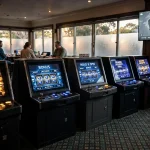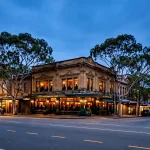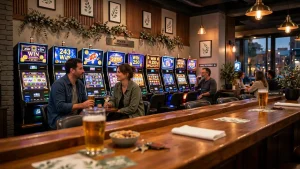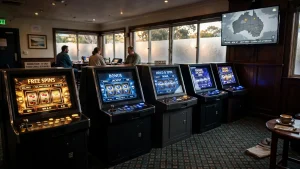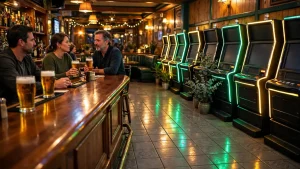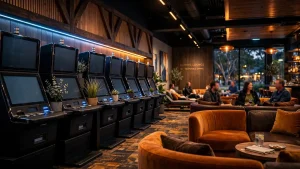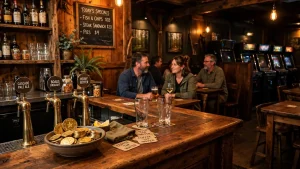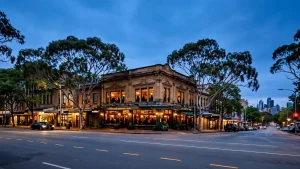
Venue listings can be outdated, and opening hours do not confirm that the gaming area is operating.
A venue being open does not automatically mean its pokies are operating or available to use. Before making the trip, check the venue’s own current information and, if anything is unclear, contact the venue directly. It is a small step, but it can save you from arriving to find that the place is closed, access is restricted, or the machines are not running.
Start with the venue’s official website or its own social media page. Look for a recent update about opening arrangements, rather than relying on a listing that may have been copied from an older source. Search results and map listings can be useful for finding contact details, but treat their hours as a starting point, not confirmation. If the information looks inconsistent or has no clear update date, a direct call is the better check.
When you call, be specific. Ask whether the venue is open at the time you plan to arrive and whether the gaming area is operating then. Those are separate questions. You can also ask whether entry to that area has any conditions, or whether a private function, maintenance work or another temporary arrangement affects access. There is no need to guess from a general “open” label.
If you are already nearby, check the venue’s own entrance notices as well. A notice at the door may reflect a same-day change that has not yet appeared online. If staff give you information by phone, note what they said and when you called; if your plans change or you are travelling later, check again. Opening details can change, and a check made earlier in the day may no longer answer the question you have when you set off.
It also helps to keep the trip flexible. If you cannot confirm that the pokies are operating, decide whether you would still want to visit for other reasons. If not, wait for a clear answer rather than treating an uncertain listing as a promise. A venue’s general opening hours may cover its dining or bar areas without telling you whether the gaming area is available.
For “open now” checks, use the local time and the venue’s own wording. A page may show regular hours, while a current post or notice explains a temporary change. If the venue’s information only says that it is open, do not read that as confirmation that every part of the venue is accessible. Ask about the specific area you intend to use.
If you are going with someone else, agree on the plan before leaving: which venue you are checking, what you will do if access is unavailable, and how you will get home. That keeps a changed plan from turning into a rushed decision. I would rather make one call than spend the trip finding out that an assumption was wrong.
There is a separate reason to pay attention to what happens inside a venue. A report by regionriverina.com.au says venues with more than 20 gaming machines are required, from 1 July, to have a dedicated responsible gambling officer on duty while those machines operate. The report also describes a one-month grace period for removing signage and introducing those officers, and a requirement for venues to keep a register of gambling-related incidents, including behaviour that may indicate a patron is at risk of harm. These arrangements are not a substitute for checking whether the venue is open, but they are part of the setting you may encounter. If you have concerns about how a venue handles a situation, ask staff who is responsible for assistance.
Keep your check simple: confirm the venue is open, confirm the gaming area is operating, and check again if the information is unclear or your plans shift. A quick call beats a wasted drive.
If you’re looking for pokies options for Canberra in 2026, this list gives you a concise starting point. Check the details that matter to you before choosing where to play.
Roby Casino
You can note Roby Casino’s stated Curacao eGaming license, held by Roby Games Ltd.
Golden Pokies
Golden Pokies lists a Curacao license, which gives you a specific licensing detail to consider.
Ricky Casino
You can choose between crypto withdrawals stated as taking under an hour and PayID withdrawals stated as taking 1–3 business days. The minimum deposit is A$20, or A$30 to qualify for the bonus.
MrPacho
MrPacho states crypto payout times of 30–120 minutes and fiat payout times of 24–72 hours. Its minimum deposit is A$30.
LevelUp Casino
You can note LevelUp Casino’s Curacao eGaming license, OGL/2023/174/0082, and its stated minimum deposit of A$15.
Vegaz Casino
Vegaz Casino lists Curacao license OGL/2024/1335/0780. Its stated minimum deposit is EUR 20.
SpinsUp
You can consider SpinsUp’s stated Curacao Gaming Control Board license, OGL/2023/174/0082, held by Dama N.V.
Lucky Dreams
Lucky Dreams lists a Curacao license and a minimum deposit of A$20 via POLi.
Uptown Pokies
Uptown Pokies states that it has operated since 2017 and lists a Curacao license. Its minimum deposit is A$20.
Bizzo Casino
Bizzo Casino lists a Curacao Gaming Control Board license held by TechSolutions Group N.V.
When people ask for the best-paying pokies in Canberra, they often mean games with a high advertised return. That figure can help describe a game, but it cannot tell you what you will collect from a particular session. It is a theoretical return calculated across a very large number of plays, not a forecast for your next spin or a promise that your balance will rise.
The distinction matters if you are comparing claims about Canberra casino pokies or trying to decide which game deserves your time. An advertised return is not a personal payout rate. Your own run may end with a win, a loss, or a result somewhere in between; the published figure does not set an outcome for an individual player.
There is another wrinkle: some game providers allow casinos to choose from more than one RTP setting for the same pokie. A specialist review has reported this practice, meaning the familiar game title alone may not identify the return setting in use. The same pokie could therefore have different stated return percentages at different casinos. A figure attached to a game in one place should not automatically be assumed to apply wherever that title appears.
Attention: An advertised return is a theoretical calculation across many plays, not a personal payout rate or a promise of your next result.
If you see a return claim, check what it actually refers to. Is it tied to the exact game and setting, or is it a general description of the title? Is the information current, and does it identify where the figure came from? If those details are unclear, treat the number as limited information rather than a reliable basis for comparing pokies. A neat percentage can look more definite than the evidence behind it.
The word “best” also depends on what you are trying to compare. A higher theoretical return, where the figures are genuinely comparable, does not mean a game is more enjoyable or more suitable for your budget. Nor does it identify which pokie will pay out sooner. Those are different questions, and an RTP figure does not answer them.
Each spin is generated independently by a Random Number Generator. In practical terms, the result of one spin does not make the next one “due” for a win, and a recent run of losses does not mean a payout is now owed. The machine is not keeping a scorecard that balances itself for you.
That can feel counterintuitive when you have watched a game produce several losing results in a row. It is tempting to read a pattern into the sequence, especially when a friend says a pokie is “ready to pay”. But past spins do not provide a dependable prediction of what comes next. The result remains uncertain each time.
The reverse is true as well. A win does not make another win more likely simply because the game has paid recently. A short winning run is not proof that the pokie has a generous setting, just as a losing run is not proof that the return claim is false. Individual sessions are too narrow a window for those conclusions.
So if you are weighing up the best pokies in Canberra, keep the claim in its proper lane: return information can describe a theoretical feature of a game, provided it matches the setting actually being used. It cannot tell you what you will win, when a win will arrive, or whether a short session will resemble the long-run calculation.
Every spin is generated independently by a Random Number Generator, meaning past results do not influence whether a win is "due" or more likely.
I would be wary of anyone turning an RTP figure into a prediction. For a fair comparison, look for clear information about the exact setting and remember that every spin is a fresh random result. That is less exciting than a “sure thing”. It is also more honest.
Searching for online pokies from Canberra can blur an important distinction: the law places the main prohibition on the company providing the service, not on an individual player. Under the Interactive Gambling Act 2001, operators cannot offer real-money online pokies to people in Australia without a domestic licence. No such licences have been issued, so there is no Australian-licensed online casino.
That does not mean every offshore site is unreachable. Some accept Australians, and the law does not make an individual player liable simply for playing on one. But access is not the same as local protection. ACMA blocks illegal offshore gambling sites, and internet service providers must follow its blocklist. A site may be inaccessible, disappear from view or be difficult to reach; none of that makes it an Australian-regulated service.
The practical problem is stark: if an offshore casino refuses to pay winnings, an Australian player has no legal recourse in Australia against that casino. A support chat, a polished website or a familiar-looking game does not change that position. If a dispute turns into a withheld withdrawal, you cannot rely on an Australian online-casino licence or domestic regulator to resolve it.
Before sending personal details or money anywhere, take a moment to consider that gap. A site accepting Australian customers is not proof that it is authorised to provide real-money casino games here. Nor does a payment method establish that a service is licensed, fair or transparent. The key question is not whether a page loads, but what protection you would actually have if the operator failed to honour its terms.
Any offshore operator may also set its own account checks and withdrawal conditions. Read the terms before depositing, and have your identity and address documents verified before your first withdrawal. That is a practical precaution, not a guarantee that a payment will be made. If the operator disputes your documents or refuses to release funds, the lack of Australian legal recourse remains.
ACMA’s role includes blocking access to illegal offshore gambling sites. The blocklist is enforced through internet service providers, so a site being available at one moment should not be mistaken for approval or permanence. A block can also make it harder to find information or contact a service after you have created an account.
BetStop is another point worth understanding before you rely on it. It applies to Australian-licensed operators; it does not bind offshore sites. Since there are no Australian-licensed online casinos, BetStop cannot provide a dependable barrier against offshore casino access. If you want to self-exclude, do not assume that registering with BetStop will close or restrict an offshore account.
Legal Recourse
If an offshore casino refuses to pay winnings, Australian players have no legal recourse in Australia to recover those funds.
This matters whether you are looking for real-money play, a no-deposit offer or a higher-stakes game. The wording of an offer does not remove the legal and practical risks. A bonus can come with conditions, and a site’s willingness to take a deposit does not mean it must provide Australian dispute resolution. I would treat any promise of easy access or easy cash-out with caution.
So, can you come across an offshore site while in Canberra? Yes. Does that make it an Australian-licensed casino, or give you a local route to recover unpaid winnings? No. That is the legal line to keep in view before sharing documents or depositing funds.
If you’re looking for pokies close to Canberra Airport or the city centre, treat the map as a starting point, not a venue list. A result can appear near a place name without being inside the airport, in the CBD or even in the part of Canberra you had in mind. Open the listing and check its full address and map pin before setting off.
For an airport search, be specific about what “near” means to you. You might mean somewhere inside the airport, a venue in the surrounding area, or a place that is practical to reach after landing. Those are different checks. A result labelled as being near the airport does not establish that pokies are available in the terminal. Read the venue’s own description and look at the pin; don’t infer what’s inside from the search label.
The same applies to the CBD. A listing may be close to the centre on a broad map view but still require a trip away from the streets you plan to visit. Zoom in, compare the address with your intended destination and check that the result refers to a physical venue rather than a general business category or an outdated listing. A promising pin is not a confirmation.
I’d also check the location shown in the listing against a second source, preferably the venue’s own current information. If the details don’t line up, pause before travelling. Map entries can be incomplete or stale, and a name appearing in a results panel does not prove that the venue has pokies. Confirm the venue itself describes the facilities you’re looking for.
“Near me” results need a little care, too. Your phone’s location setting, map scale and chosen search area can all affect which places appear first. Make sure the map is centred on your actual starting point and that the result is in Canberra, rather than simply accepting the first nearby-looking suggestion. If you’re planning a trip from the airport, compare the listed location with where you’ll be going next.
If a result pairs Canberra with Victoria, check the state and address rather than relying on the place names in the heading. Search listings can combine terms in ways that are not useful for deciding where to go. Canberra is in the Australian Capital Territory; make sure the details point to the Canberra you mean.
Once you have a candidate, use its own contact or information page to confirm the location and the facilities before making the trip. That is more useful than assuming an airport or CBD label tells you exactly what is there. A quick check beats a wrong turn.
A venue’s atmosphere tells you little about how it handles gambling harm. Before settling on a place, I’d look for practical safeguards: clear information about help, staff who can explain the venue’s process, and a way to raise a concern without having to make a scene. A polished sign is not the same thing as support you can actually access.
Ask whether staff can point you to deposit, loss or session-time limits, and explain how self-exclusion works at that venue. These are familiar responsible-gambling tools, but it is worth checking what is available on site rather than assuming every venue handles them in the same way. If the answer is vague, that is useful information too.
There is also a specific staffing change to ask about. A report by regionriverina.com.au says that, from 1 July, venues operating more than 20 gaming machines are required to have a dedicated responsible gambling officer, or RGO, on duty while the machines are running. The report also describes a one-month grace period for venues to put the officer arrangements in place and remove relevant signage. Since that transition period can affect what you see on a visit, ask who the RGO is and how to contact them. A named role is more useful than a general assurance that “someone can help”.
The same report says venues will need to keep a gambling incident register. It is intended to document events that may indicate a patron is at risk of harm or already affected by it. You do not need to inspect a register; the practical check is whether staff can explain how they respond when someone appears distressed or unable to stop. Calm, specific answers matter.
Pay attention to the placement of signs as well. Guidance to a gaming lounge should not be visible from ATMs or EFTPOS terminals, and ATM directions should not be in sight of gaming machines. If a sign is steering people towards more access to cash from the machine area, that is worth raising with venue staff. It is a small detail with a clear purpose.
When comparing Canberra venues, I would not treat size, décor or a busy room as evidence of good safeguards. Look for visible, usable options and staff who can describe the process plainly. You can also ask where to find the venue’s responsible-gambling information before deciding to stay. No venue can remove the risks of gambling, but its arrangements should be understandable and accessible—not something you have to discover only after a problem starts.
A late-night search can make round-the-clock access sound like a given. It isn’t. A page describing a venue as open all night may be out of date, refer to a different service, or fail to tell you whether pokies are available throughout those hours. Check the venue’s own current information before setting out.
Start with the hours published by the venue itself, rather than relying on a search result snippet or an old directory entry. Look for a current opening-hours page or a recent update on an official channel. If the information is unclear, call and ask directly. It is a small step, and less annoying than arriving to find the doors shut.
Be precise about what you are checking. A venue’s general opening hours do not necessarily tell you when its gaming area is operating. Ask whether the pokies area is open at the time you plan to visit, and whether any temporary change affects those hours. A venue might be open for another purpose while the gaming area is not available. Don’t treat one as proof of the other.
The phrase “open now” can also be misleading if the information behind it has not been updated. A listing may show regular hours without reflecting a one-off closure or a change to the usual schedule. Check the date of any notice, and favour information published by the venue over a copied listing with no clear update.
If you are planning a visit late at night or early in the morning, check again close to the time you leave. Confirm the day as well as the opening time: hours can vary across the week, and a schedule for one day may not apply to the next. If you cannot confirm that the pokies area will be operating, don’t assume it will be.
I’d treat “24-hour pokies” as something to verify, not a promise. The same applies to any claim that a Canberra venue is open around the clock. Opening hours are only useful when they are current and refer to the part of the venue you intend to use. A quick call can settle that. No guesswork.
A Crown-branded result can make it sound as though there is a Crown casino in Canberra, but the name in a heading, map pin or directory entry is not proof that a Canberra venue exists. I would not plan a trip around “Crown” pokies without first confirming that the result refers to a real, current venue in the city.
Check what the listing actually identifies. Does it give a Canberra venue’s own name and contact details, or does it simply combine “Crown” with “Canberra” in a page title? Is the information published by the venue itself, or copied into a general directory? A result that repeats the words you entered may still be describing something elsewhere, or may not identify a physical venue at all. Search wording can be confident. That is not the same as confirmation.
Be just as cautious with phrases such as “best pokies room”. They can sound like a recommendation about a particular room at a particular casino, even when the page does not clearly name or locate one. Before you rely on that claim, establish which venue it means and whether the information comes from the venue. If it cannot answer those basic questions, it is not much help in deciding where to go.
The same care applies to claims about a maximum cash payout. There is no single figure I can responsibly attach to “pokies at Crown in Canberra” without first establishing the venue and the terms that apply. A headline number can also leave out what it covers: a machine’s stated prize limit, the amount paid in cash at the venue, and the process for handling a larger win are not necessarily the same thing. Ask the venue directly what its current rules say, and get the answer before you play rather than relying on a snippet or an old discussion.
If you contact a venue, use a phone number or contact channel tied to its own current information. Ask plainly whether it operates in Canberra under the Crown name, whether the particular room or machines mentioned are there, and how any payout limit is handled. If the answer is vague, or the contact details lead somewhere unrelated, stop and check again.
I’d treat a Crown-related Canberra listing as an unconfirmed lead, not a destination. Confirm the venue’s identity first; only then does it make sense to ask about its machines or payouts. A search result is not a venue.
A search for pokies in Canberra’s CBD can make the area sound like one neat cluster of clubs and machines. It isn’t a reliable way to establish what is physically there. “CBD” may be used loosely, and a result that mentions Canberra or a club does not, by itself, confirm that the venue is in the central business district or has pokies available.
I wouldn’t treat a list assembled from search snippets as a venue directory. Before making a trip, check the venue’s own current information and contact it if the details are unclear. Confirm the address, whether it is open to visitors, and whether its information specifically mentions gaming machines. A club’s name or general description is not enough to settle those points.
The same goes for “best” pokies in the CBD. That wording can suggest there is a verified local shortlist, but a ranking is only useful if it is based on current, comparable details. Without those, it may simply mix venues from different parts of Canberra or repeat an old listing. Better to establish what is actually located in the area first. No magic shortcut.
If you are looking for a club, check its entry conditions as well as its location. Some venues may be members-only or have rules for guests; don’t assume you can walk in because a page mentions the club. If the information is incomplete, a quick call can save a wasted trip.
For anyone searching because they want to avoid pokies, self-exclusion is worth raising directly with the venue. Ask what process it offers, how it works, and whether it covers the premises you intend to avoid. Deposit, loss and session-time limits are other responsible-gambling tools, but they are not a substitute for confirming the venue’s own arrangements.
If you choose to visit, decide beforehand how much time and money you are prepared to spend, and leave if sticking to that plan becomes difficult. You do not need to keep playing to make the trip worthwhile. And if you are trying to stay away from gambling, consider getting support rather than relying on a venue’s location or signage to do the work for you.
The useful question is not whether a page calls somewhere a Canberra club. It is whether the particular venue is in the CBD, welcomes you, and has the facilities you are asking about. Check those details directly before setting out.
A request for pokies in Parkes can be easy to misread: the place name alone does not tell you which venue, if any, you have in mind. Before setting out, make sure the result you are looking at refers to the Canberra area, rather than somewhere else with the same name. A map pin and a venue’s own contact details are more useful than a result that merely repeats “Parkes”.
I would avoid treating a listing, photo or old post as proof that pokies are currently available at a particular address. Search results can be stale, and a venue name appearing beside Parkes does not establish that it has machines. Check the venue’s own information, then contact it directly if the details are unclear. Ask specifically whether pokies are available at that location; a general reference to gaming or club facilities may not answer that.
If you are already nearby, confirm the address before travelling. Names and map labels can point to a broader area, while the venue you intend to visit may be elsewhere. It is a small check that can save a wasted trip.
The same care applies when someone recommends the “best” pokies in Canberra and mentions Parkes. That phrase is not a reliable guide to a specific machine or a particular venue. First establish what location the recommendation means and whether the place actually offers pokies. Then make your own decision based on the information you can confirm, rather than assuming a confident-sounding label settles it.
I would not rely on an unverified list to identify a Parkes venue. Look for an exact address and a direct way to confirm the details; if those are missing, pause before making the trip. No guesswork needed.
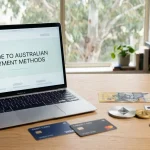
“Cashless” can mean different things depending on what you’re looking at. If you mean paying at a Canberra venue without cash, don’t read online payment information as proof that its pokies accept PayID or any other particular payment method. PayID is a way to transfer money through Australia’s New Payments Platform, using an email address, mobile number or ABN. That describes a bank transfer—not a venue machine or its payment setup.
The PayID information you may find in gambling material concerns deposits to online services. To use PayID for real-money online gambling, a person must first link it to a bank account. That does not make an online casino Australian-licensed, establish that its games are fair, or show that a Canberra venue supports cashless play. There is no Australian-licensed online casino, and the Interactive Gambling Act 2001 prohibits operators from providing real-money online casino games to people in Australia. If an offshore casino withholds winnings, Australian players have no legal recourse in Australia.
Keep the place names separate, too. A result mentioning Newcastle and Canberra together is not evidence that a venue, payment arrangement or machine offering in one city also exists in the other. Check the exact venue you intend to visit and ask it directly how payments work on site. I wouldn’t rely on a generic page about PayID deposits for that answer.
So, if you’re after cashless play in Canberra, look for venue-specific information about its in-person payment arrangements. If the material is about depositing online, it answers a different question. Easy mix-up.
Yes, Australian players can legally play on offshore sites that accept them, but companies cannot legally offer real-money online pokies to Australians without a domestic licence, and no such licences have been issued. If an offshore casino refuses to pay you, you have no legal recourse in Australia.
Each spin is generated independently by a Random Number Generator, so a win is never due because of a previous run of results. A game’s advertised return is theoretical and does not predict what you will win in a session.
No strategy can make a particular spin win: each result is independent. If you compare games, check whether the return figures apply to the exact game and setting, and use tools such as deposit, loss and session-time limits to stay within your budget.
You must be at least 18 years old to gamble online in Australia.
Yes, PayID is treated like any other qualifying deposit method at the recommended sites. Check the bonus terms, including wagering requirements and any cashout limits.