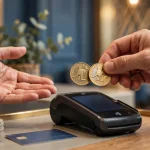
Deposit buttons do not establish how funds can be withdrawn; compare available routes, gateway handling, fees and mobile steps separately.

A payment screen can make the first step look simple: choose a route, enter an amount and send it. But a deposit option tells you only how money may go in. It does not, by itself, tell you how a balance could be paid back out. A specialist review notes that deposit and withdrawal methods may differ, so treat the two sides as separate checks rather than assuming one route handles both.
There is a more important Australian context before any payment comparison. Under the Interactive Gambling Act 2001, operators cannot provide real-money online casino services, including pokies, poker and table games, to people in Australia. The law targets the service provider; it does not make playing at an offshore casino a lawful local offering. So information about payment methods is not a recommendation to use an offshore gambling service.
If you are checking a payment arrangement for any reason, start by finding the stated withdrawal route. Look for the method you would be expected to use to receive funds, not just the logos or buttons shown beside “deposit”. If the information is unclear, treat that as a reason to stop and seek clarification, not as a minor detail to sort out later.
Choosing a casino payment method means weighing what is known about deposits, withdrawals and licensing before you sign up. Use these details as a starting point and check the payment options available to you in Australia.
Roby Casino
Roby Casino is listed with a Curacao eGaming licence held by Roby Games Ltd. Consider this licensing detail as you assess the casino.
Golden Pokies
Golden Pokies is listed with a Curacao licence. The available information does not specify its payment methods or processing times.
Ricky Casino
Ricky Casino lists crypto withdrawals as taking under an hour and PayID withdrawals as taking 1–3 business days. The minimum deposit is A$20, rising to A$30 to qualify for the bonus.
MrPacho
MrPacho lists crypto payouts at 30–120 minutes and fiat payouts at 24–72 hours. Its minimum deposit is A$30.
LevelUp Casino
LevelUp Casino is listed with a Curacao eGaming licence, OGL/2023/174/0082, held by Dama N.V. Its minimum deposit is A$15.
Vegaz Casino
Vegaz Casino is listed with Curacao licence OGL/2024/1335/0780. Its stated minimum deposit is EUR 20.
SpinsUp
SpinsUp is listed with a Curacao Gaming Control Board licence, OGL/2023/174/0082, held by Dama N.V. No payment methods or processing times are specified in the available information.
Lucky Dreams
Lucky Dreams lists a A$20 minimum deposit for POLi. It is also listed with a Curacao licence.
Uptown Pokies
Uptown Pokies is listed with a Curacao licence and has been operating since 2017. Its minimum deposit is A$20.
Bizzo Casino
Bizzo Casino is listed with a Curacao Gaming Control Board licence held by TechSolutions Group N.V. The available information does not specify its payment methods or processing times.
The distinction matters because the route you use to add funds may not be available for a cash-out. A method can be presented as suitable for paying in without establishing that it can receive a withdrawal. Even where a site lists both deposits and withdrawals, check whether the specific method is available for your account and location, and whether its terms describe any conditions attached to it. Do not infer support from a familiar payment name alone.
This is the basic discipline behind casino payment risk management: consider the whole journey of the money before making a decision, rather than judging a method by the first screen. Read the withdrawal terms alongside the deposit information. Check what the operator says about identity checks, payment ownership and any other requirements that could affect a withdrawal. A casino may ask for government-issued identification, proof of address and evidence that a payment method belongs to you; the exact requirements should be confirmed with the operator. Keep your details consistent and do not send money on the assumption that verification can be dealt with only when you want to cash out.
Promotions need the same care. A “no-deposit” offer does not necessarily mean there are no conditions: wagering, verification and withdrawal requirements may still apply. Read the terms that govern any advertised balance before relying on it. The label is not the whole deal.
I would not compare online casino payment methods by speed or convenience until the cash-out path is clear. A quick-looking deposit can still leave you with questions about how a withdrawal is handled, and a method listed on a general payments page may not be available for every transaction. Check the actual terms, and do not treat a deposit button as proof of a matching withdrawal option.
The practical rule is straightforward: confirm the withdrawal route before any deposit is considered. If you cannot establish how the money would be returned, you do not yet have enough information to assess the payment setup. In Australia, that check does not change the legal position on real-money online casino services. It simply prevents a payment label from being mistaken for a complete or suitable route. Cash out first. Always.
Payment options can look familiar while serving very different purposes. A bank transfer, an e-wallet, a prepaid voucher and a blockchain transaction are not interchangeable: one may be presented for funding, another for a cash-out, and some may not be usable for both. For any payment service you encounter, check the route itself rather than relying on a label or a general description.
There is an important Australian context here. The Interactive Gambling Act 2001 makes it illegal for operators to provide real-money online casino games, including pokies and table games, to people in Australia. A payment option appearing on an offshore gambling site does not make that service lawful in Australia. This overview is about recognising payment categories, not recommending a casino or a way to fund gambling.
Legal Warning
Under the Interactive Gambling Act 2001, it is illegal for operators to provide real-money online casino services to people in Australia.
Bank transfers move money between accounts, but the label covers different processes. A payment may be initiated through a bank service, while a withdrawal may be handled separately by the operator. Do not assume that a bank route shown for adding funds will also be offered for receiving them. PayID and BPAY are Australian bank-payment names, but their particular roles and timing depend on the route being offered; they are not simply two labels for the same thing.
Bank payment routes can also involve checks linking the account to the person making the transaction. Keep the account details and the name on any payment method consistent with the information supplied to the service. A mismatch can create complications when a transaction is reviewed.
E-wallets hold or move funds through a payment account rather than sending them directly from your everyday bank account each time. Skrill and Neteller are examples of named e-wallet services. Whether an e-wallet can be used for a particular transaction depends on the service and the operator’s stated options. Deposit availability alone does not establish that withdrawals can go back through the same wallet.
Some specialist reviews group e-wallets with other payment categories for Australian readers. Treat that as a broad way of organising options, not proof that a specific wallet is available, suitable or lawful for real-money casino use in Australia.
A prepaid voucher limits spending to the value loaded onto it, which can make the spending boundary easy to see. That does not make it a cash-out route. Voucher deposits may not be returnable to the voucher, so a separate withdrawal method may be required. This difference matters more than the voucher’s branding: know how money could be returned before considering how it might be paid in.
Visa and Mastercard are familiar card names, but familiarity is not a reason to treat a card as an acceptable online gambling deposit method. Australian financial institutions may block transactions to offshore casinos, and credit cards or credit-related products should not be used to fund online wagering.
Digital currencies belong to a different category. Do not treat them as a suggested deposit route. Where blockchain withdrawals are discussed, remember that a confirmed transaction is irreversible and has no chargeback option. A wrong address or other error can be final.
A specialist review may group bank transfers, e-wallets, prepaid vouchers and digital currencies as payment categories. That broad grouping does not tell you which routes an individual service supports, or whether a deposit route can also receive a withdrawal. In Australia, the more useful distinction is between the payment label and the actual role it is being offered for.
PayID and BPAY both involve Australian bank payments, but they work differently and should not be treated as interchangeable. If you are comparing casino payment options, the first practical check is whether the operator lists a route for the transaction you intend to make. A method shown for deposits does not, by itself, confirm that it can be used to withdraw funds.
PayID links an identifier—such as a mobile number, email address or ABN—to an Australian bank account through the New Payments Platform. Major Australian banks support PayID, but that does not mean every payment service or operator makes it available. A specialist review notes that PayID deposit availability depends on the operator and that cash-out support needs to be checked separately. Treat that as a prompt to inspect the specific payment terms, not as a promise that a route will be offered.
Before relying on PayID, check what the operator actually displays for both directions of a transaction. Is PayID listed as a deposit option? Is it also named for withdrawals, or does the operator specify another route? Read the terms attached to that method, including any instructions about account details. If the information is unclear, ask the operator before proceeding rather than assuming that a familiar Australian bank service works the same way on every site.
That distinction matters because a bank-linked payment can look straightforward while leaving you without a suitable way to receive a payout. I’d make the withdrawal route the deciding check, then see whether PayID fits the deposit side too. A payment label is not a cash-out guarantee.
BPAY is another bank-payment route, but the timing is different. A specialist review gives a processing estimate of one to two business days for BPAY payments. That is a stated estimate, not a promise about every transaction: the operator’s own instructions and the timing of your payment still matter. If you need funds to appear promptly, don’t mistake BPAY for a real-time option.
The same specialist review describes BPAY as rarely used for real-time gameplay and as a possible fallback when PayID is unavailable. That makes it more of a backup than a like-for-like substitute. Check whether the operator accepts it, how it expects you to make the payment, and how long it says processing may take. If BPAY is the only bank route shown, decide whether its stated timing suits you before taking any further step.
There is also a wider point that is easy to miss: in Australia, real-money online casino-style services are prohibited for operators under the Interactive Gambling Act 2001. Payment availability does not change that legal position, and the presence of PayID or BPAY on a payment page should not be read as approval of the service.
For a simple comparison, think of PayID as a bank-account link whose availability must be confirmed with the operator, and BPAY as a bank-payment option with a longer stated processing window. Neither label answers every practical question. The useful checks are specific: is the route listed, is it available for the transaction you need, and what timing does the operator state? Check both sides.
A payment gateway is the part of a checkout where you select a route, enter or confirm payment details, and see whether the transaction has been accepted. That screen is useful, but it does not tell you everything about what happens after you press the button. An accepted payment is not the same as a completed account check or an approved withdrawal.
I treat the gateway as a point to check the details, not as proof that the whole transaction is settled. Before confirming, make sure the amount and currency displayed match what you intended, and read any message about a declined or pending payment. If the page gives an error, do not keep submitting the same payment blindly; first check your account activity and the operator’s transaction record, where available, so you do not create uncertainty about whether a charge went through.
Verification Documents
Operators may require government-issued identification, proof of address dated within the last three months, and evidence of ownership of the payment method used.
The distinction matters because payment acceptance and identity verification are separate issues. A specialist review reports that an operator may ask for government-issued identification, proof of address dated within the previous three months, and evidence that you own or control the payment method used. Those are examples of documents that may be requested, not a promise that every operator asks for the same set. Check the operator’s stated requirements before sending anything, and use its specified process rather than replying to an unexpected request with sensitive documents.
If a request arrives, compare the account name and payment details with the documents you provide. Keep copies of the messages and note which transaction they refer to. If the names do not match, or the request is unclear, ask the operator to explain what it needs before sending further material. A vague label such as “verification” is not enough to tell you which document is being requested or why.
The same care applies when a gateway offers a familiar payment brand. Seeing a logo or a successful deposit screen does not establish that the same route can be used later, nor does it resolve any account checks. Read the terms shown for the specific transaction and keep a record of the confirmation. Small checks now beat a long support exchange later.
Payment technology can make checkout look simple; it cannot remove the need to understand who is collecting your details and what service you are paying for. In Australia, the Interactive Gambling Act 2001 prohibits operators from providing real-money online casino games to people physically located here. A smooth payment screen does not change that legal position. Take that seriously before sharing payment or identity information.
A payment label is not proof that you can use that route, and it says even less about getting money back out. “SMS payment”, CashtoCode or eCheck may appear in a description or search result, but the name alone does not establish that a service is available to you, accepted for a particular transaction, or supported for withdrawals. Treat each as a claim to verify, not as a working route.
There is an important Australian context here: providing real-money online casino games to people in Australia is prohibited under the Interactive Gambling Act 2001. This is not a recommendation to find an offshore casino with a particular payment option. If you are checking a payment claim, keep that legal restriction in view rather than treating a payment logo as a sign that the service is lawful or suitable.
Payment methods can differ between deposits and withdrawals. A specialist review reports that distinction, but the actual options depend on the operator and can change. Even where a payment method is shown for adding funds, that does not mean it can be used to cash out. The same caution applies to PayID: a specialist review says its deposit availability depends on the operator and that withdrawal support needs separate confirmation. A familiar Australian payment name is not a promise about the full transaction.
Attention: A payment label or logo is not proof that a route is available to you or supported for withdrawals.
Read the wording around the method carefully. “Deposit” and “withdrawal” are not interchangeable, and a page that lists a system without saying which direction it supports leaves a practical question unanswered. Check whether the route is described for incoming payments, outgoing payments, or both. If the information is unclear, do not assume that customer support or a logo will resolve it after you have paid.
The same goes for claims about a “safe” payment system. A name or badge by itself cannot establish that a transaction is protected, that your details have been verified, or that a withdrawal will be available. Focus on what the terms actually say about the route and what documents may be requested. Keep your own records of the payment and any relevant correspondence.
SMS deserves particular care because it can sound like a complete payment option when it may only describe a billing label or a way to authorise a charge. Do not infer that a text message means a deposit has cleared, or that the same route can return funds. For CashtoCode and eCheck, apply the same test: look for a clear description of the transaction direction and conditions, not just a name in a list.
I would not deposit first and untangle the wording later. If a payment claim does not spell out whether it covers deposits or withdrawals, treat that as unresolved. A method name is not the route.
A payment page can make a deposit route look straightforward. That tells you little about getting money back. A specialist review notes that casinos may show different methods for deposits and withdrawals; treat that as a point to verify on the specific site, not as a rule that applies everywhere.
There is an important Australian caveat before you open any payment portal: the Interactive Gambling Act 2001 makes it illegal for operators to provide real-money online casino games to people in Australia. A payment screen does not make that service lawful or mean Australian consumer protections cover a balance held there. The checks below are a way to read what a portal says, not a recommendation to use an offshore casino.
Look for separate sections labelled for deposits and withdrawals. If a method appears only under deposits, do not assume it will be available for cash-outs. Check the withdrawal page or the operator’s written terms for the exact route, any account requirements and whether you must withdraw through the same channel you used to pay in.
PayID is a useful example of why the distinction matters. A specialist review says its deposit availability depends on the operator and that withdrawal support needs to be checked separately. So an “available” PayID badge on a deposit screen is not enough: find explicit confirmation of the cash-out route before entering payment details.
If the portal is vague, or sends you in circles between a cashier page and general terms, that is not a small detail. Stop and seek a clear answer rather than treating a successful deposit as proof that the reverse transaction will work.
A familiar payment name or logo does not establish that a method is supported for both directions. Read the labels beside it, and check whether the page distinguishes funding from withdrawal. If the site names a route but provides no explanation of its role, don’t fill in the blanks yourself.
Make sure the account details you would need for a cash-out are yours and are entered correctly. Note any verification steps the operator says apply before processing a withdrawal, and whether the method’s availability depends on account status or location. Save a copy of the relevant terms and the payment-page wording; portal details can change.
If you cannot find a clear cash-out method, regard the payment portal as incomplete. A deposit button is the easy part. The awkward surprise comes later.
A portal may display several payment labels, but a long menu does not tell you which options are actually available to you or whether they can receive withdrawals. Check the specific route, not the overall count of logos. If a method is missing from the cash-out area, ask for clarification before taking any further step.
I’d make that the test: can you identify the intended withdrawal method and find its conditions in writing? If not, you have not established that the route works for cashing out. No guesswork.
A payment route can look inexpensive at the point of deposit and cost more when money leaves. For any online casino payment provider, separate three things: a fee charged by the provider, a charge set by the operator, and the time taken to process a withdrawal. They can apply at different stages, so a single “free” label tells you very little.
There is also an important Australian limit: the Interactive Gambling Act 2001 prohibits operators from providing real-money online casino games to people in Australia. The figures below describe payment details reported in specialist reviews, not a recommendation to use an offshore casino or a claim that its services are lawful here.
A specialist review reports that Skrill withdrawals to a bank take one to two days, while some casinos impose a transaction fee of one to three per cent. That is a potentially material difference: the provider’s transfer time and the casino’s charge are separate details, and the fee may depend on the operator. If you are assessing a transaction record or a payment policy, check which party applies the charge and whether it is deducted from the amount sent.
For Neteller, a specialist review states that credit-card funding carries a 1.45% charge. That is a funding cost, not a withdrawal fee. More importantly, credit card payments cannot be used for online gambling in Australia, so this detail should not be read as a usable deposit suggestion. The distinction matters: a fee attached to a payment method does not make that method permissible.
MuchBetter is described in a specialist review as faster for withdrawals than a traditional bank transfer. The comparison is useful, but it is not a fixed cash-out promise; the same review says bank transfers can take up to five days. Processing can depend on both the operator and the payment route, so a provider’s speed alone cannot settle when funds will arrive.
Withdrawals to banks take one to two days; some casinos may charge a 1-3% transaction fee.
Credit-card funding carries a 1.45% charge, though credit cards should not be used for gambling in Australia.
Described as faster for withdrawals than traditional bank transfers, which can take up to five days.
A specialist review says casino bank transfers may be handled manually once or twice a week. It gives the example of a withdrawal requested on Friday arriving by Wednesday. That gap can matter as much as a fee if you need to plan around access to funds. A displayed processing estimate may not capture when a request is reviewed, so look for the operator’s stated schedule as well as the bank-transfer timeframe.
Before relying on any quoted cost, read the current terms for the specific route and check whether charges apply to sending, receiving, or currency conversion. Keep the amount and timing in view together: a low stated fee does not compensate for a delay you cannot accept, and a fast route is not automatically the cheapest.
For Australians, the practical takeaway is not to choose a provider from a fee table alone. The legal restriction comes first; payment details are not a workaround. If you are reviewing a past transaction or comparing published terms, treat fee and timing claims as route-specific, and avoid assuming one operator’s conditions apply elsewhere.
An instant deposit and a quick cash-out are separate parts of a transaction. A balance appearing promptly after a payment does not tell you how long a withdrawal will take, or whether the same route can be used to receive it. Check each side separately rather than treating “instant” as a promise about the whole process.
A specialist review describes Visa and Mastercard deposits as instant when accepted. But Australian financial institutions block many standard transactions to offshore casinos, according to that same kind of review. So a card’s stated processing speed is no guarantee that a payment will go through. And don’t use a credit card to fund online gambling.
Withdrawals have their own timing. For bank transfers, the relevant question is not just how quickly you can send money, but how and when the casino processes a cash-out. An instant payment label says little about that. Read the withdrawal terms before depositing, and check whether the method you intend to use is actually available for withdrawals.
The same distinction matters with blockchain withdrawals. A specialist review puts Litecoin processing at about 10 minutes, while Bitcoin can take up to an hour when the network is congested. These are estimates, not a promise of when funds will arrive: network congestion can affect the timing. More importantly, blockchain transactions are irreversible and have no chargeback option. Check the destination details carefully before confirming one.
That is a different risk from a delayed bank payment. With a blockchain transaction, a mistake cannot be undone through a chargeback. A faster estimate is not automatically a safer choice.
When comparing an instant payment casino claim with a withdrawal option, look for separate deposit and cash-out times, any stated processing schedule, and the conditions that apply before funds are released. If the operator gives a clear deposit speed but no clear withdrawal information, don’t fill in the gap with an assumption. Speed on the way in is only one part of the decision.
A familiar app name does not tell you whether it works for both sides of a casino transaction. A payment option might appear at deposit but not at cash-out, and support can depend on the operator. I’d treat the app’s name as a starting point, not proof that the whole route is available.
A specialist review describes Apple Pay deposits as using the digital wallet on your phone, with biometric authentication to approve the payment. That explains the phone-wallet flow, but it does not make Apple Pay a withdrawal route: it cannot be used to receive casino cash-outs. Check the operator’s listed withdrawal options separately before you put money in.
Skrill has a different practical detail. A specialist review reports that a withdrawal from Skrill to a bank takes one to two days, while some casinos apply a transaction fee of one to three per cent. Those are separate parts of the cost: the transfer time and any casino fee. Read the fee terms for the specific route rather than assuming every Skrill transaction is priced the same way.
Neteller also needs a little care around funding. A specialist review states that credit-card funding of Neteller carries a 1.45 per cent charge. That is a provider funding cost, not a reason to use a credit card for gambling. Keep the casino payment route distinct from how you fund an e-wallet, and check the applicable terms before moving money.
The useful comparison is not simply “which app is quickest?” It is whether the app is accepted for the transaction you intend, what it costs, and where the money can go afterward. For an app-based deposit, confirm the cash-out path before proceeding; for a bank withdrawal from an e-wallet, account for the stated transfer time and any fee. Small detail, big difference.
If a payment label appears in a cashier, don’t assume it covers deposits and withdrawals alike. Look for the exact method and direction shown, then check the terms attached to it. An app can make paying feel familiar while leaving the eventual cash-out dependent on another route. That is the bit worth checking first.
A phone makes it easy to move through a payment screen quickly, which is exactly when a small check can get skipped. Before entering payment details, look at the deposit and withdrawal information as separate routes. A method displayed for adding funds does not establish that it can be used to receive money later.
PayID is linked to an Australian bank account through the New Payments Platform. The identifier can be a mobile number, email address or ABN. If a payment page offers PayID, check which identifier it asks you to use and whether the route is stated for deposits, withdrawals or both. Having your mobile number linked to your bank account does not, by itself, confirm that a particular payment route is available for cash-outs.
Apple Pay offers a different phone-based flow. A specialist review describes deposits being made from the phone’s digital wallet, with biometric authentication used to approve the payment. That can make authorising a deposit feel like a single tap, but it does not make Apple Pay a withdrawal route. Check where any withdrawal would be sent before treating a mobile wallet as a complete payment option.
On a small screen, open the payment terms rather than relying only on the icons or labels in the cashier. Read the route shown for deposits, then find the withdrawal details independently. If the information is unclear, do not assume the two match. Keep a record of the payment method used and the account details attached to it; that can help you follow what you selected if a transaction needs checking.
There is also a legal point that matters more than a neat phone interface: under Australia’s Interactive Gambling Act 2001, operators cannot provide real-money online casino services to people in Australia. A mobile payment screen does not change that rule. Check the legal position before engaging with any gambling service. A polished checkout is not permission.
Yes, fees can apply: bank transfers may incur a flat $5–$15 charge, and currency conversion from AUD to EUR can cost 2–4%. Crypto withdrawals are usually free, but check the terms for the specific payment route.
No, a fast deposit does not guarantee an instant withdrawal. Litecoin withdrawals take about 10–30 minutes, while bank transfers can take up to five days.
PayID links your mobile number, email address or ABN to an Australian bank account through the New Payments Platform. Whether you can use it for a deposit depends on the operator, and withdrawal support should be checked separately.
No payment method makes an offshore real-money online casino a lawful service in Australia. The Interactive Gambling Act 2001 prohibits operators from providing real-money online casino games to people in Australia.
Litecoin is among the fastest listed options, with withdrawals taking about 10–30 minutes. The withdrawal route must be supported for your account, so check the operator’s terms.
Yes, fees may apply. Some casinos charge a 1–3% fee on Skrill transactions, and Neteller charges 1.45% for credit card funding.