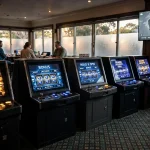
A live stream can show how a game is presented, but it cannot verify an operator’s licence, bonus terms or player protections.

A live dealer casino is an online format built around a real person presenting a game from a studio or venue. Instead of seeing only a digital animation, you watch a video stream and make decisions through the website or app. The dealer conducts the session on camera; your screen is the viewing point and the interface is how you take part.
That distinction can make the experience feel closer to a casino table, but it does not change the nature of the service. It remains online gambling, and the dealer on screen does not mean you are dealing directly with an Australian venue or an Australian-regulated casino. A polished stream can tell you something about presentation. It cannot, by itself, establish who operates the site or what protections apply to you.
The legal setting matters before the studio lighting does. Under the Interactive Gambling Act 2001, companies cannot provide real-money online casino services to people in Australia without a domestic licence. No Australian online casino licences have been issued, so there is no Australian-licensed online casino offering live dealer play. The Act applies to the operators providing the service, rather than making an individual player its enforcement target.
Choosing a live dealer casino online in Australia calls for checking what is known about each option before you decide. Use these short verdicts as a starting point, and verify that the games and payment terms suit you.
Roby Casino
Roby Casino is listed with a Curacao eGaming license held by Roby Games Ltd. This gives you a stated licensing detail to consider.
Golden Pokies
Golden Pokies is listed with a Curacao license. That is the licensing information available for you to consider.
Ricky Casino
Ricky Casino lists crypto payouts in under an hour and PayID payouts in 1–3 business days. The minimum deposit is A$20, or A$30 to qualify for the bonus.
MrPacho
MrPacho lists crypto payouts in 30–120 minutes and fiat payouts in 24–72 hours. Its minimum deposit is A$30.
LevelUp Casino
LevelUp Casino lists a Curacao eGaming license, OGL/2023/174/0082, held by Dama N.V. Its minimum deposit is A$15.
Vegaz Casino
Vegaz Casino lists Curacao license OGL/2024/1335/0780. Its minimum deposit is EUR 20.
SpinsUp
SpinsUp lists a Curacao Gaming Control Board license, OGL/2023/174/0082, held by Dama N.V. This is the licensing detail provided for you to review.
Lucky Dreams
Lucky Dreams lists a Curacao license and a A$20 minimum deposit when using POLi. These are the available details to weigh up.
Uptown Pokies
Uptown Pokies is listed as operating since 2017 and holding a Curacao license. Its minimum deposit is A$20.
Bizzo Casino
Bizzo Casino is listed with a Curacao Gaming Control Board license held by TechSolutions Group N.V. This licensing detail is the available point of reference.
That distinction is easy to misread. It does not turn an offshore casino into a locally regulated one, nor does it give an Australian player local protection if something goes wrong. Australians may encounter offshore sites that accept them, but that does not create an Australian licence or a local route for resolving a dispute. If an offshore casino refuses to pay winnings, Australian players have no legal recourse in Australia against it.
The Australian Communications and Media Authority (ACMA) is the main domestic regulator responsible for enforcing the Act. It blocks access to illegal offshore gambling sites, and internet service providers must comply with its blocklist. So availability can be uneven: a site being visible to one person, or reachable at a particular moment, is not proof that it is authorised in Australia. Nor does a live broadcast make the underlying operator local.
I’d keep those points separate when judging what “best” could mean here. A lively stream, a tidy interface or a confident dealer may speak to the way a service presents itself. None answers the more important local question: what standing do you have if the operator disputes a balance or will not release your money? In this market, an offshore operator does not gain Australian oversight just by serving Australian customers.
The live element is the format, not a safety certificate. It describes how the game is presented; it does not settle the operator’s legal status, establish what recourse is available, or guarantee that a dispute will be handled fairly. Those are different questions, and they deserve a more careful look than the camera angle.
There is also a basic age boundary: the legal age for gambling in Australia, including online pokies, is 18. Meeting that age requirement does not change the licensing position. The same distinction applies whether you are looking at a live presentation or another online casino format: the experience may look familiar, while the legal and practical protections remain different.
If you are comparing live dealer online casinos, start with that reality rather than with claims about atmosphere. Australia has no domestic online casino licence, and ACMA’s blocking role is part of the picture. The law targets operators, not individual players, but that does not make offshore play equivalent to using a locally licensed service. If the operator is offshore, local recourse is the part you should not assume exists.
The short version: “live dealer” tells you what appears on screen. It does not tell you who stands behind the site, whether it has Australian authorisation, or what happens if a payment dispute arises. In Australia, those limits are part of the market itself—not fine print you can safely leave until later.
A bonus headline tells you what is being dangled; the turnover rule tells you what you may have to do before withdrawing winnings. I would start with that rule, not the advertised amount. The same headline can mean very different things depending on whether the wagering requirement applies to the bonus alone or to your deposit and bonus together.
Bonus Turnover Calculation
Identify the multiplier
Find the wagering requirement (e.g., 40x) in the terms.
Determine the base amount
Check if the multiplier applies to the bonus alone ($500) or the deposit plus bonus ($1,000).
Multiply the figures
Calculate the total turnover required (e.g., 40 × $500 = $20,000) before winnings can be withdrawn.
Wagering requirements are often written as a multiplier: the amount covered by the terms is multiplied by that figure to calculate how much you must bet. A specialist review offers a useful, but not universal, yardstick: it treats a requirement of 35x or lower as worth examining and anything above 40x as punishing. That is a reviewer’s assessment, not an Australian standard or a guarantee that an offer is good value. The operator’s own wording is what determines the calculation.
Here is the arithmetic behind a $500 bonus with a 40x requirement. If the multiplier applies to the bonus alone, the required turnover is $20,000. That means placing bets totalling that amount before you can withdraw any winnings tied to the bonus. It does not mean you must lose $20,000, but it does mean your balance can be exposed to a great deal of play before the withdrawal condition is met. The headline figure is not the amount you can simply collect. Not even close.
The base matters just as much as the multiplier. If a 35x rule applies to a $500 deposit plus a $500 bonus, the calculation is 35 times $1,000: $35,000 in bets. A 35x requirement may sound less severe than 40x, yet the second calculation demands more turnover than the first example. So when you compare a live-dealer welcome bonus with another kind of promotion, don’t compare the multipliers in isolation. Check what amount they apply to.
 Aussie Pokies Online in Australia: Key ChecksLearn how Australian rules distinguish site access from authorisation, plus what to check on game terms, payments and withdrawals. No Australian casino…
 Adelaide Casino Guide: Parking, Hotels and DiningFind practical guidance on getting to Adelaide Casino, nearby stays, poker, events and dining. Parking access and conditions can change.
Read the terms for the exact wagering base, the deadline for completing turnover, and which bets count towards it. Check whether the rule covers the bonus, the deposit, or both. Then look for any restrictions that could affect how you play or whether a bet qualifies. If the wording leaves the calculation unclear, you cannot reliably work out the obligation from the headline alone. A generous-looking figure can still come with conditions that make it difficult to use.
The same applies when you see a no-deposit bonus claim. “No deposit” describes one part of the offer; it does not tell you whether winnings can be withdrawn without meeting wagering conditions, whether there is a cash-out cap, or what other terms apply. Treat the label as a prompt to read the rules, not as a promise of withdrawable cash. There is no sensible way to judge value from the words “no deposit” alone.
Free spins need their own check. A specialist review notes that free-spin offers may limit how much of the resulting winnings can be cashed out. That cap can matter even if the spins produce a balance: the amount credited and the amount you can ultimately withdraw are not necessarily the same. Find the cash-out limit in the terms before counting any winnings as available money. If the cap is missing or unclear, don’t assume the whole balance is payable.
I’d also separate three figures when reading any promotion: what you receive, what you must wager, and what you are permitted to withdraw. They answer different questions. A bonus amount does not tell you the turnover; turnover does not tell you the cash-out cap; and neither tells you whether the terms are practical for you. Write down the relevant figures and do the multiplication yourself. It is less exciting than the banner, which is rather the point.
For Australian readers, these calculations are a way to understand terms, not a recommendation to claim a promotion. Real-money online casino services are prohibited for operators serving people in Australia, and there is no Australian-licensed online casino. The law targets operators rather than individual players, but an offshore promotion does not become locally protected because its terms are clearly written. Keep the legal and financial risks separate from the arithmetic.
A careful read should leave you able to answer a few plain questions: which balance is multiplied, what turnover is required, what counts toward it, whether there is a time condition, and whether a cap limits cash-out. If any answer is buried, contradictory or absent, the headline cannot fill the gap. I wouldn’t treat a large advertised bonus as valuable until those details are clear. The fine print is the real price tag.
“Live dealer” is a broad label, not a game description. It does not tell you which titles are available, how a particular table works, or what rules apply. A page can use the phrase prominently and still leave those practical details unanswered.
 Online Keno Casinos in Australia: What to CheckLearn how to assess keno games and casino-style sites and understand Australia's legal position: there is no Australian-licensed online casino.
 Casino Stays in Western Australia: What to CheckLearn how to distinguish an on-site casino hotel from a nearby stay and compare room rates, cancellation rules, fees and package inclusions.
That distinction matters when a site advertises a large choice of live tables. A headline is not a catalogue, and a category name does not establish that a specific game is offered. Nor does it tell you whether two tables with similar names follow the same rules. Treat broad claims about variety as claims to check, not as dependable details.
For any game, the useful information is specific: its full title, the rules that govern a round, and any conditions that affect how you can take part. If those details are absent, there is little basis for comparing one table with another. A polished presentation cannot fill the gap. Neither can a general promise of a realistic or engaging experience.
I would also separate the name of a game from the rules attached to it. Even when a familiar name appears, that alone does not establish the version, permitted actions, or other table conditions. Read the relevant rules rather than assuming the title means the same thing everywhere. If the rules are difficult to locate or too vague to explain how play works, that is a reason to pause.
The same care applies to claims about live-dealer platforms. The platform label does not, by itself, establish which games it carries or how those games are configured. A provider name, where one is stated, is not a substitute for the individual title and its rules. Each claim needs to be checked at the level it describes.
In Australia, there is an additional boundary: online casino-style games offered to people in the country are prohibited interactive gambling services under the Interactive Gambling Act 2001. There is no Australian-licensed online casino. So a list presented as a local selection of live tables should not be mistaken for evidence of domestic approval.
Legal Status
Under the Interactive Gambling Act 2001, online casino-style games offered to people in Australia are prohibited interactive gambling services, and there is no Australian-licensed online casino.
Keep the standard simple. A game claim should be clear enough for you to identify the title and understand the rules before making any decision. If a page gives you only broad language about choice, atmosphere, or live action, it has not answered the useful questions. Don’t fill in the blanks yourself.
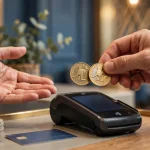
A bitcoin symbol beside a cashier button can look like a clear answer: this casino accepts cryptocurrency. It is not enough to establish that. I can’t confirm that any casino discussed here accepts Bitcoin or another cryptocurrency, or that crypto deposits and withdrawals are available. Treat a payment badge as a claim to check, not proof of a working payment route.
That distinction matters if you are looking for a live-dealer casino that takes Bitcoin. The phrase may describe a real feature at a particular operator, but it does not tell you whether the option is currently available to Australians, whether it applies to deposits, withdrawals or both, or what conditions attach to it. Those details need to be stated plainly by the operator and checked before you make a decision. A logo alone answers none of them.
The same caution applies to broader claims about a crypto casino with live dealers. A cryptocurrency payment option says nothing by itself about the operator’s legal status, the fairness of its games or how clearly it explains its terms. It does not establish that a table is live, that a withdrawal will be approved, or that a dispute will be handled fairly. Payment branding and player protections are separate questions. Don’t let one stand in for the other.
 Best Casino in Darwin: Visitor Guide and Key DetailsExplore how to plan a Darwin casino visit, including hotel and dining questions, event and opening-hour checks, online searches and venue details.
 Best pokies in Adelaide: venue hours and accessLearn how to check current Adelaide gaming hours, distinguish venue opening times from pokies availability, and confirm details before travelling.
I’d look for precise wording rather than a row of currency symbols. Does the cashier name the currencies it accepts? Does it explain whether the route works for both deposits and withdrawals? Are any restrictions or conditions set out before you create an account or send funds? If those answers are absent or hard to find, you have a claim, not a dependable description of the service.
There is another practical point: a crypto payment can make a transaction feel detached from ordinary banking, but that does not make the casino anonymous, licensed or accountable. Nor does it make the payment reversible or guarantee that a withdrawal will reach you. Avoid assuming that the technical method changes the risks attached to dealing with an offshore operator.
For Australians, the legal setting remains the important backdrop. The Interactive Gambling Act 2001 prohibits operators from providing real-money online casino games to people in Australia, and there is no Australian-licensed online casino. A Bitcoin option does not alter that position. It is not a licence, a regulatory approval or a signal that Australian protections apply.
So if a site advertises Bitcoin alongside live tables, separate the claims. Check what the payment option actually covers, and do not read it as evidence of fairness or legal protection. If the operator’s explanation is vague, stop there rather than filling in the gaps yourself. A badge is easy to display; meaningful assurances take more than that.
Attention: A Bitcoin or cryptocurrency payment badge is not a signal of regulatory approval or a guarantee that Australian legal protections apply.
A useful review should let you separate what has been checked from what is simply claimed. I look for concrete details, a clear explanation of how they were checked, and wording that does not turn an unknown into a promise. A polished page is not proof that its descriptions match the service a player will encounter.
For practical checks, look for the account and withdrawal process, not just the sign-up screen. A specialist review reports that identity checks may be required before a first withdrawal. These can include a photo of your identification and proof of address, and sometimes a selfie holding the identification. Read the stated requirements carefully and see whether the review explains when documents are requested. If it skips that step, it has left out something that could affect access to your money.
A review can also be judged by how it handles uncertainty. Does it distinguish a tested feature from information copied from an operator’s own material? Does it say when it checked the details, and does it avoid treating a claim as independently confirmed? I trust a review more when it admits what it could not establish than when every feature is presented as settled.
Be cautious with labels such as “free.” They can refer to different arrangements, and that word alone does not tell you whether access is genuinely without payment, whether an account is needed, or what conditions apply. A review should spell out the arrangement rather than using a tempting label as a substitute for details. I would not treat a headline as evidence.
The same discipline applies to live-dealer descriptions. A review may describe what an operator says it provides, but that is not the same as independently confirming a particular table, rule, or service. Keep those categories separate. That is the useful distinction.
Finally, remember what a review cannot do: it cannot turn an offshore casino into an Australian-licensed one or guarantee that a withdrawal will be paid. Compare the review’s specific evidence with the operator’s written terms, especially around account checks and cash-outs. If the page offers certainty without showing how it reached that conclusion, take the certainty with a grain of salt.
A page may describe live roulette as mobile-friendly, but that label alone tells you little about how it will work on your phone. It does not establish whether the page is designed for a small screen, whether its controls are usable by touch, or whether a live video stream will remain stable on your connection. Those details can vary, so treat them as things to check rather than promises.
Before relying on a mobile site, look at the practical information it provides about access. Does it explain whether you need an app or can use a browser? Are operating-system and browser requirements stated clearly? Can you find help for connection problems, account access and session interruptions? If the information is vague, you have little to go on. Don’t install software or hand over personal details just because a page uses the word “mobile”.
Roulette also needs more than a screen that fits in your hand. If you are considering a live table, you would want to understand how the table is presented, where the betting controls sit, and what happens if the connection drops. But a mobile-friendly badge does not answer those questions. Nor does it tell you whether the displayed table is genuinely live, how its rules work or what limits apply. Keep those claims separate from the basic question of whether a page opens on a phone.
I’d also avoid judging access from one quick visit. A page loading once does not establish that it will remain usable across different networks or during a longer session. If you do inspect a site, read its terms and help pages first, and be wary of instructions that ask you to disable ordinary device security settings. A polished mobile layout is not proof of reliable service, fair play or a safe place to deposit.
There is a broader Australian point, too: a phone does not change the legal status of an online casino service. The Interactive Gambling Act targets operators providing prohibited real-money casino games to people in Australia. ACMA can block access to illegal offshore gambling sites, and internet providers must comply with its blocklist. So an address that opens at one moment may not remain accessible. That is a real practical limit, not a technical setting you can fix by switching devices.
For a mobile roulette experience, separate what you can see from what a site merely claims. A clear layout is only a layout. It is not a guarantee of access, protection or a workable table.
For Australians considering real-money play with a live dealer, the important distinction is who the law targets. The Interactive Gambling Act places the legal burden on operators that provide prohibited online casino services to people in Australia. It does not make an individual player liable simply for playing on an offshore site that accepts them.
That distinction can be easy to misread. Being able to open an account or place a bet does not mean the operator is authorised in Australia, or that Australian protections apply. Access is not the same as local oversight.
The practical risk becomes clearest when money is due back to you. If an offshore casino refuses to pay your winnings, you have no legal recourse in Australia against it. A support chat, account history or record of the result may help you explain a dispute to the operator, but it does not create an Australian route to enforce payment. That is a serious gap, not a minor inconvenience.
Before putting money at risk, consider what you could lose if the operator disputes a balance or simply does not pay. Do not treat a live stream, a polished website or the fact that an account is available to Australians as a substitute for enforceable local protections. None of those things changes where you can seek help if a payout is withheld.
No Local Recourse
If an offshore casino refuses to pay your winnings, you have no legal recourse in Australia to enforce payment.
I would keep the decision simple: only stake money you can afford to lose, and do not count a displayed balance as money in your bank. If a site’s terms or withdrawal conditions are unclear, that uncertainty matters more when you have no Australian legal recourse to rely on. If you choose to proceed, keep your own records and avoid chasing losses to recover a disputed amount.
The law’s focus on operators does not make offshore real-money play risk-free for the person at the screen. You may not face a player penalty under the Act, but you can still be left out of pocket with no Australian legal remedy. That is the consequence worth weighing before a hand begins.
A live blackjack table may look familiar on screen, but the label alone tells you very little. It does not establish which rules apply, how a hand is dealt, what options are available, or what the table limits are. Those details matter: two games carrying the same broad name need not work identically.
I would not treat a general claim about live blackjack as evidence of a particular table. Before you consider playing, look for the rules attached to that exact table and check that they explain the dealing procedure, permitted decisions, and any limits. If those details are absent or hard to find, you cannot make a sound comparison. A familiar layout is not a rules sheet.
There is also a legal distinction worth keeping in view. Under the Interactive Gambling Act 2001, providing online blackjack to people in Australia is treated as a prohibited interactive gambling service, and Australia has no licensed online casino market. That is about the operator’s service; it does not turn an offshore table’s description into a reliable account of how a game is run.
When reviewing a table page, separate what it actually states from what its presentation suggests. A live video feed does not, by itself, confirm the rules, the handling of a disputed hand, or the protection available if something goes wrong. Read the table information and the operator’s terms together, and do not fill gaps with assumptions drawn from a game you have played elsewhere.
If you proceed to an offshore site, check what identity and address documents it requires before your first withdrawal; verification may be requested at that point. Also remember that BetStop applies to Australian-licensed operators and does not bind offshore sites. That difference matters if you rely on self-exclusion to control access.
The practical test is simple: can you find clear, table-specific rules and understand them before committing money? If not, there is no useful basis for judging that blackjack table beyond its name and appearance. That is not enough.
A software name on a casino page is not, by itself, proof of what runs a live table or how that table works. I’d want the claim tied to something specific: a named provider, a clear description of the product, and terms that explain how the service is presented to customers. If the page offers only broad language about “premium” or “trusted” technology, treat that as sales copy, not evidence.
The same goes for features. A site may use confident wording about streams, table interfaces or game tools, but those descriptions do not establish which functions are available, how they operate, or whether they apply to every table. Don’t fill in the gaps from what another casino says about its software. Similar labels can hide different arrangements.
Bonus wording needs the same discipline, though the useful check is the written condition rather than the headline. Read the terms attached to the specific promotion and identify what must happen before any balance can be withdrawn. Look for restrictions on eligible play, expiry conditions, withdrawal rules and any cap on cash-out. A large headline tells you little about the practical value if the conditions are vague or scattered across several pages.
I’ve learned not to treat a banner and its terms as interchangeable. Save or note the version you read before opting in; wording can change, and a later dispute is harder to assess if you cannot show what was offered. If a condition is unclear, ask the operator to explain it in writing rather than relying on a chat reply that leaves the key point unanswered. Clear answers matter. Vague answers don’t.
There is also a legal boundary that marketing language cannot erase. Under the Interactive Gambling Act 2001, operators may not provide real-money online casino games to people in Australia, and no Australian online casino licence has been issued. A software badge, a polished live-table description or a bonus page does not alter that position.
So keep the claims separate: software branding is not proof of a particular live-dealer setup, and a bonus headline is not its full set of conditions. I would rely only on details that are explicit, consistent and attached to the relevant service or offer. If the wording will not support a plain explanation, don’t assume the missing detail in the operator’s favour.
A polished live-dealer page can make a casino seem like a straightforward choice. I would start somewhere less exciting: with the boundary between what a site presents and what it can actually protect you from. Australia has no locally licensed online casino, and the Interactive Gambling Act 2001 prohibits operators from providing real-money online casino games to people in Australia. The Australian Communications and Media Authority (ACMA) blocks access to illegal offshore gambling sites, too. A list labelled “top” cannot change that.
So I wouldn’t treat a ranking, a familiar-looking logo or a live-video feature as proof that a service is suitable for Australians. Nor does a control in an account menu establish that an offshore operator is licensed here or that Australian protections apply. Keep the distinction plain: a site may describe its own features, but that description is not a substitute for local oversight.
If you are assessing your own gambling habits, practical boundaries matter. Deposit limits can restrict what you put in; loss limits can cap what you are prepared to lose; and session time limits can set a stopping point. Self-exclusion is another standard tool. These options can help you set rules before you are caught up in play. They do not make an offshore casino safer, create a route to recover money, or turn it into a locally licensed service.
BetStop also has a specific boundary: it applies to Australian-licensed operators and does not bind offshore sites. Don’t assume that registering there will block access to an offshore casino or stop its marketing. That difference is easy to miss when tools are discussed as if they work everywhere.
I’d also decide on a firm stop before opening an account, rather than relying on a limit to make the decision for you later. If gambling is causing harm, step away and seek support instead of increasing a limit or trying to win losses back. No ranking can remove the legal and practical risks attached to offshore play. The controls are boundaries, not guarantees.
A live stream or polished presentation does not prove a casino is safe. Australia has no licensed online casinos, and if an offshore operator refuses to pay, you have no legal recourse in Australia.
It is the amount you must bet before you can withdraw winnings linked to a bonus. Check whether the multiplier applies to the bonus alone or to your deposit and bonus together: for example, 35x on a $500 deposit plus a $500 bonus means $35,000 in bets.
You must be at least 18 to gamble online in Australia.