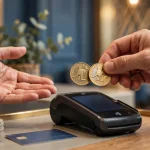
A first-deposit offer depends on funding an account, while no-deposit labels may still carry activation conditions.

A first-deposit offer is tied to the first time you pay money into an account. The deposit is part of the deal: without making it, you have not met the basic condition for a bonus described as a first-deposit bonus. That is the useful distinction to keep in mind when an offer is presented with a welcome message or a large headline. The name tells you when the promotion applies, not necessarily what you must do to receive it.
A no-deposit offer starts from a different point. It may give a new account free cash or free spins without asking you to fund the account first. That can sound like a straightforward alternative, but the label is not a guarantee that no payment will be required at any stage. Some offers called no-deposit still make a small deposit a condition of activation.
That distinction matters before you register or enter payment details. If you want a bonus that is genuinely available without paying in, check the actual activation condition rather than relying on the promotion’s headline. One specialist casino review describes a listed offer that requires a minimum deposit of AU$5 to activate. Treat that as a condition attached to that particular offer, not as a rule that applies to every no-deposit promotion.
A first-deposit offer is worth checking against its eligibility rules and payment requirements before you choose. Use this list as a starting point, and confirm the current terms directly with the casino.
Roby Casino
Roby Casino is listed with a Curacao eGaming licence held by Roby Games Ltd. Check the current first-deposit offer and its terms before opting in.
Golden Pokies
Golden Pokies is listed as licensed in Curacao. Review its current first-deposit bonus terms to see whether they suit your plans.
Ricky Casino
Ricky Casino lists a A$20 minimum deposit, with A$30 required to qualify for the bonus. Crypto payouts are stated as under an hour, while PayID payouts take 1–3 business days.
MrPacho
MrPacho lists a A$30 minimum deposit. Its stated payout times are 30–120 minutes for crypto and 24–72 hours for fiat.
LevelUp Casino
LevelUp Casino lists a A$15 minimum deposit and a Curacao eGaming licence, OGL/2023/174/0082, held by Dama N.V. Check the current bonus conditions before making a deposit.
Vegaz Casino
Vegaz Casino lists a minimum deposit of EUR 20 and a Curacao licence, OGL/2024/1335/0780. Check the current offer details before deciding whether to deposit.
SpinsUp
SpinsUp is listed with a Curacao Gaming Control Board licence, OGL/2023/174/0082, held by Dama N.V. Review its current first-deposit offer and conditions.
Lucky Dreams
Lucky Dreams lists a A$20 minimum deposit via POLi and a Curacao licence. Check the current bonus rules and payment requirements before you opt in.
Uptown Pokies
Uptown Pokies is listed as operating since 2017, with a Curacao licence and a A$20 minimum deposit. Confirm the current first-deposit offer and its terms.
Bizzo Casino
Bizzo Casino is listed with a Curacao Gaming Control Board licence held by TechSolutions Group N.V. Check its current first-deposit bonus terms before making a choice.
I’d read the wording in this order: what event triggers the offer, what you need to do to qualify, and whether the offer is available before or only after a deposit. A phrase such as “first deposit” points to a payment as the trigger. “No deposit” suggests you can receive the promotion after opening an account without funding it, but the stated conditions still decide how it works. If the text says a deposit is needed to activate it, then it is not available to you without paying, whatever the headline says.
There is no need to treat the two labels as interchangeable. A first-deposit bonus is designed around a first payment; a no-deposit bonus is presented as a way to receive an offer without making that payment. In practice, the wording can get muddled, especially when an offer’s title sounds more generous than its activation instructions. The condition is the part that counts.
This is also why a first-deposit bonus is not automatically the better choice just because it sounds like a larger welcome offer, nor is a no-deposit offer automatically risk-free because it does not begin with a payment. Those are different starting conditions, not a verdict on which promotion gives you more value. For now, focus on whether you must deposit to claim it. The size and limits of an offer are a separate comparison.
If an offer is described as no-deposit but asks for money before it appears in your account, pause and read the wording again. It may be a no-deposit promotion with a deposit-based activation step, or the description may be imprecise. Either way, you should understand the condition before proceeding. Don’t infer that “no-deposit” means “no payment ever”; it may only describe how the offer is advertised or the point at which you first qualify.
A useful way to sort the offers is to ask one plain question: what must happen before the bonus becomes available? If the answer is “make your first payment”, you are looking at a deposit offer. If the answer is “open an account, with no payment required”, it fits the no-deposit description. If a minimum payment is mentioned, the offer has a payment condition regardless of its label.
That small check saves confusion later. A headline is there to catch your eye; the activation wording tells you what the offer asks of you. Read both, and keep the two categories separate. Clear enough.
The key distinction is who the law addresses. Under the Interactive Gambling Act 2001, providing real-money online casino games to people physically in Australia is prohibited. That covers Australian and overseas businesses alike: an offshore location does not make it lawful to offer online pokies, poker or table games to customers here.
Legal Prohibition
Under the Interactive Gambling Act 2001, providing real-money online casino games to people physically in Australia is prohibited for both domestic and overseas businesses.
The restriction concerns the operator’s conduct. The stated position for individuals is different: Australian residents face no criminal or civil penalties simply for accessing, registering with or playing at an offshore online casino. That does not make the service legal in Australia, or turn an offshore site into an Australian-regulated casino. Those are separate questions.
It is easy to blur them when a site is available in English, takes Australian dollars or advertises a first-deposit offer to Australian players. None of those details changes the rule about providing the games. A welcome promotion is still part of an online casino service; it is not a legal workaround. The same applies whether you are looking at a casino on a computer or a mobile casino app or website. The relevant issue is where the customer is physically located, not which screen they use.
The Act places the prohibition on offering the service to people in Australia. So when you assess an online casino first-deposit bonus, it helps to separate two things that can otherwise get tangled together: the offer’s terms and the legal status of the service making it. A generous-looking promotion cannot establish that the operator is permitted to provide real-money casino games here.
Nor does the fact that a site is run from another country put it beyond the Australian rule. The prohibition applies to domestic and international entities offering the covered games to people physically residing in Australia. Online casino-style games, including pokies, poker, blackjack and roulette, fall within the prohibited-service category when offered to customers here.
That is the operator-facing side of the picture. The individual-facing side is narrower: the stated legal position does not impose criminal or civil penalties on Australian residents merely for using an offshore casino. It is important not to stretch that point into a broader assurance. It says something about penalties for the player; it does not certify the site, guarantee a withdrawal or provide local consumer protection.
A first-deposit bonus online casino offer can therefore appear in front of an Australian reader without changing the underlying legal distinction. The promotion may be presented as a welcome deal, but the legal question is still whether the business is offering prohibited real-money games to someone in Australia. The offer itself does not settle that question.
Some offshore services may remain visible or reachable, but visibility should not be mistaken for local approval. Australian authorities actively block and enforce restrictions against offshore online casino services. A site loading on your phone is not proof that it has permission to serve Australian customers; a mobile casino first-deposit bonus is no different in that respect.
Consumer Risk
At offshore casinos, Australian consumer protections do not apply and there is no BetStop coverage, meaning you have no local recourse if an operator refuses a withdrawal.
There is also a practical risk beyond the wording of the law. At an offshore casino, Australian consumer protections do not apply, there is no BetStop coverage, and you have no local recourse if the operator refuses a withdrawal or voids a win on a technicality. That matters even where the player is not subject to criminal or civil penalties for accessing the service. The two statements can both be true: the individual is not penalised for playing, while the service is not legally offered to Australian customers and the player lacks local protections.
This is why I would not read “available to Australians” as “approved in Australia.” A site can use Australian-facing language or show a bonus to local visitors; those are marketing choices, not a change to the law. And a best online casino first-deposit bonus is not, by itself, evidence of a lawful local option. The promotion and the legal status need to be kept apart.
If you are considering an offer, keep the legal context in view before comparing its value. The law prohibits operators from providing real-money online casino games to people in Australia, while the stated position does not impose criminal or civil penalties on residents simply for accessing offshore sites. Neither point should be mistaken for a guarantee about what an offshore operator will do with your account or balance.
That is the line worth remembering: the restriction is on providing the service, not a player penalty for merely using it. An offshore bonus does not erase that distinction.
Two no-deposit offers can display similar headline amounts yet leave you with very different conditions. I compare them by looking at the wagering requirement and the maximum cashout cap together. The first tells you how much play is required before a withdrawal can be considered; the second limits how much bonus-derived money you can take out. A generous-looking offer can lose its shine on either point.
A specialist review of Australian-facing offers reported wagering requirements in the 40× to 60× range. Treat that as a snapshot, not a promise that every promotion sits inside those bounds. The multiplier alone is not enough to judge an offer, either: check what amount it applies to and which funds count. Those details determine how the condition works, so do not compare multipliers in isolation.
For a broad comparison, start by putting the requirement and the cap side by side. A lower multiplier may look attractive, but a restrictive cashout limit can still sharply limit the result. Conversely, a higher cap does not make a demanding wagering condition disappear. You need both figures before deciding whether two offers are genuinely comparable.
AU-facing no-deposit offers have been reported with maximum cashout caps ranging from A$50 to A$200. That is a wide spread. If you are weighing two promotions, note the cap separately from the bonus amount and the wagering condition; it may apply to winnings from the offer rather than to your whole account balance. Read the wording closely instead of assuming the displayed figure is the amount you can withdraw.
Reported Caps
AU-facing no-deposit offers have been reported with maximum cashout caps ranging from A$50 to A$200.
I find it useful to treat the cap as a ceiling, not as a target or a payout promise. Even if a balance grows beyond it, the promotion’s terms may limit what can be cashed out. A cap at the lower end of the reported range can make an otherwise appealing offer less useful to someone hoping to build a larger withdrawable balance. That is the catch.
When you assess first-deposit casino bonuses, check that you are comparing the same kind of promotion. A deposit-linked offer and a no-deposit promotion are not interchangeable simply because both advertise bonus funds. Their qualifying conditions can differ, and a comparison that ignores that distinction can make one look better than it is.
For no-deposit offers, my quick checklist is simple: find the wagering multiplier, identify the amount it applies to, and locate the maximum cashout cap. Then read how the operator defines eligible winnings. If a term is unclear, do not fill in the gap with an assumption. The headline is the easy part; the limits are where the comparison gets useful.
There is no single figure that makes one promotion the best casino first-deposit bonus for every player. Your own comparison depends on the offer type and its terms, not just the size of the advertised bonus. A larger headline amount can sit beside a tougher wagering condition or a tighter cap. Read the terms as a package. That is the part worth your time.
A game can be allowed on a bonus and still do very little to move its wagering requirement along. The key detail is its contribution rate: the share of each eligible bet that counts toward the required wagering. A pokie and a table game may therefore treat the same stake quite differently.
Pokies generally contribute the full value of eligible bets. That makes them the clearest option when you are trying to make progress under a bonus’s game rules. But “pokies count” is not a safe assumption for every title: an offer can restrict play to selected games, or exclude particular categories altogether. Check the actual terms before you start.
Blackjack, baccarat and roulette often contribute only a small portion of each bet. The stated contribution can range from zero to ten per cent; some offers give table games as little as ten per cent. If a game contributes zero, bets on it do not advance wagering at all. If it contributes only a fraction, you need to place more eligible bets to make the same progress as you would on pokies.
Live dealer games can be tighter still. Live dealer rounds may contribute as little as three per cent, and some offers exclude live dealer titles entirely. So a live blackjack table is not necessarily treated like an ordinary blackjack game, even if the rules look familiar. The label and the specific terms matter.
That difference can catch you out. A table game may appear in the casino
Pokies generally contribute the full value of eligible bets, whereas blackjack, baccarat, and roulette often contribute only a small portion (zero to ten per cent). Live dealer rounds may contribute as little as three per cent or be excluded entirely.
A wagering multiplier turns a bonus amount into a target for total bets. The basic calculation is:
bonus amount × wagering multiplier = required bets
So a A$10 bonus with a 40× requirement means A$10 multiplied by 40: you would need to place A$400 in bets before reaching the stated wagering target. The target is the sum of your bets, not the amount you need to win or keep in your balance. You could reach it while losing money, winning money, or moving between the two.
The same calculation applies to a A$20 bonus at 40×. That gives a target of A$800 in bets. A higher multiplier increases the target even when the bonus itself stays the same: a A$10 bonus at 50× requires A$500 in total bets. These examples are a useful way to check whether a headline figure feels meaningful once the multiplier is included.
A specialist review describes no-deposit wagering requirements ranging from 40× to 70×. Treat that as a reported range, not a promise that a particular offer will fall within it. The multiplier alone does not tell you the full calculation, either. Check whether the terms apply it to the bonus amount, as in the examples above, or define a different base. If the bonus and deposit are both included, the amount used in the calculation would differ; do not assume which basis applies without reading the offer’s wording.
When comparing a first-deposit bonus with no wagering against one that carries a multiplier, separate the advertised bonus from the amount of betting attached to it. If an offer genuinely has no wagering requirement, there is no multiplier-based bet target to calculate. If it uses language such as “no wagering” prominently but gives a multiplier in its terms, the numbers do not match: read the detailed condition before treating the bonus as unrestricted.
One practical check is to write down the bonus amount, the multiplier, and the resulting total bets before accepting the offer. For instance, the A$10 and 40× example becomes A$400; the A$20 and 40× example becomes A$800. That makes the scale plain without confusing the target with a cash balance or a guaranteed return. A wagering target is a requirement to bet, not a forecast of what will be left afterwards.
I find this simple multiplication is the quickest way to compare the workload attached to different bonus figures. Do the arithmetic first; the headline can wait.
Free spins are a different kind of welcome offer from cash credit: they give you a set of spins on a pokie rather than a balance to use across the casino. If a first-deposit offer includes spins, check which game they are attached to before you claim it. A specialist review describes free spins as being assigned to a particular pokie, while a no-deposit chip may be limited to a selection of slots. Those are not interchangeable promises; the listed games matter.
That restriction can change how useful the offer feels. You may already know the pokie, or you may be asked to play one you have never tried. Either way, look for the game name in the promotion’s terms and in your account once the reward appears. If the offer names one title, do not assume you can transfer the spins to another. A free-spin balance is not a general-purpose casino balance.
The timing deserves the same attention. A specialist review reports a 72-hour expiry for free spins, compared with a seven-day validity period for most no-deposit cash bonuses. Treat those periods as offer-specific details to confirm, not a promise that every promotion follows the same clock. The countdown may start when the spins are credited, so check the stated start point as well as the expiry time. Don’t leave it for later.
I would check the promotion before making a deposit, then check the account page after the reward is credited. That gives you a chance to confirm the game and the deadline while the offer is still usable. A first-deposit bonus with free spins can sound straightforward, but the game assignment and short validity window are the practical bits that decide whether you can use them.
Free-chip offers also need a close read. The term can describe bonus credit for play on selected slots, rather than spins on one named pokie. A specialist review makes that distinction, but the offer’s own conditions should tell you which format applies. Look for whether the reward is a fixed number of spins or credit, which games accept it, and when it expires. If those details are unclear, do not rely on the headline wording.
For free spins, the useful question is not simply how many are advertised. It is whether you can play them on the assigned game before the stated deadline. For cash credit, check its separate validity period rather than assuming the spins and cash share one expiry. Different reward types, different clocks.
A bonus does not always arrive in the same way. A specialist review describes two possible routes for a no-deposit offer: it may be credited automatically, or you may need to enter a bonus code during sign-up or in the cashier. That difference is easy to miss when you are moving quickly through a registration form.
If the offer is automatic, there may be no code field to fill in. Once you have completed the steps shown for the promotion, check the account balance or bonus area to see whether it has appeared. If the offer requires a code, enter it in the field provided at the specified point in the process. The sign-up page and cashier are separate places, so do not assume that a code entered in one will carry over to the other.
Claiming a Bonus
Check the route
Determine if the bonus is credited automatically or requires a specific bonus code.
Enter the code
If a code is required, enter it in the designated field during sign-up or in the cashier.
Verify the balance
Check the account balance or bonus area to ensure the reward has appeared.
For a first-deposit offer, read the claim instructions before paying in. Look for whether the promotion is applied automatically or asks you to enter a code, and note where that action has to happen. A code field can be easy to overlook, while an automatic offer may not need one at all. There is no benefit in guessing: use the route described for that particular promotion.
I would also avoid treating a visible bonus label as proof that every step is complete. Check the account display after claiming, and keep the offer’s instructions handy in case you need to confirm what you selected. The key point is simple: automatic credit and code entry are different activation routes, and the offer’s own instructions tell you which one applies.
Before you start, make sure you know whether the code belongs in the registration process or the cashier. If there is no code requested, do not invent one or assume that a promotion has failed just because you cannot see a field. Follow the stated route, then check whether the bonus is shown in your account. That small pause can save a muddle.
A bonus can look straightforward until you read the conditions attached to it. The terms may set an expiry period, restrict which games count or are allowed, and cap the amount you can cash out. Those rules can change the value of a first-deposit promotion—or leave you with no bonus at all if you breach them.
Check the expiry before you start. A bonus that lapses while unused, or while you are still playing through its conditions, may be removed. The exact deadline belongs to the offer’s terms, so do not assume it matches another promotion. Note when the clock starts and what must be done before it runs out.
Game restrictions need the same attention. The terms may exclude particular games or types of play. Do not switch to an excluded game simply because it appears in the lobby: activity that breaks the promotion’s rules can put the bonus and associated winnings at risk. Keep to the eligible games stated in the offer.
The maximum stake is especially easy to overlook. A specialist review reports limits on bonus-funded bets in the A$5 to A$6.50 range, but that is not a universal rule; the operator’s own terms control. Check whether the cap applies per bet or spin, and stay below the stated maximum every time. One oversized bet can be enough to void a promotion. Small print, expensive lesson.
Before accepting an offer, I would scan for four things: its expiry, excluded games, maximum stake and any clause allowing the operator to cancel the bonus for a breach. If a condition is unclear, do not guess your way through it. Save or record the terms shown when you claim the promotion, so you can check the rules that actually applied to your offer.
Some no-deposit offers may require you to verify your email address before the bonus is made available. That is an account check, not the same thing as entering a promotion code. If you are considering a first-deposit welcome bonus, read its own conditions too: an email step may apply to one offer and not another.
A specialist affiliate review reports that its offer’s verification link had to be used within 24 hours. Treat that as a condition reported for that offer, not a fixed rule for every casino or promotion. The link’s deadline and the offer’s eligibility rules can differ, so check the current terms and any instructions shown during registration.
If verification is required, use the email address you registered with and look for a message from the operator. Check your spam or junk folder if it does not appear in your inbox. Before clicking, make sure the message relates to the account you just created; a link sent for a different account will not resolve the issue.
Once you open the message, follow its verification link promptly, especially where the offer gives a specific deadline. If the link has expired or the message never arrives, check the account page for a resend option or contact the operator through its stated support channel. Don’t assume that creating an account alone has completed verification, or that a bonus will appear before any required check is finished.
Keep the email and the offer terms handy until you know whether verification has been accepted. That makes it easier to identify whether the hold-up is the email step or another condition attached to the promotion. One small check, before you count on the offer.
A balance shown in an account is not necessarily money you can withdraw. With a no-deposit offer, bonus winnings are generally held behind wagering and verification conditions. Until both are satisfied, the withdrawal option may remain unavailable, even if the balance looks substantial.
Wagering is one gate; account checks are another. An operator may require you to verify your identity before releasing funds. That is separate from any email confirmation needed when opening an account: withdrawal checks can still apply later. Read the terms for the exact requirements, and make sure the details on your account match the documents you are asked to provide. A mismatch can delay a request.
Then check the maximum cashout. Many no-deposit promotions cap the amount you can take from bonus winnings. If your balance exceeds that ceiling, the excess may not be payable. The figure displayed in the account can therefore be larger than the amount the promotion allows you to withdraw. A first-deposit bonus that can become real money is still subject to the offer’s conditions; the label alone does not settle what is payable.
A separate hurdle is the casino’s minimum withdrawal amount. One specialist review reported minimums of A$25 to A$100 at many offshore casinos aimed at Australian players. Treat that as a reported range, not a rule for every operator. If your eligible balance falls below a site’s minimum, you may be unable to request a withdrawal until the balance meets it. That can matter particularly when a cashout cap and a minimum withdrawal sit close together.
Before putting time into an offer, check four things in its terms: what wagering remains, what verification is required, the maximum cashout, and the minimum withdrawal. Those conditions determine whether a bonus balance can become payable, not just whether it appears on screen.
There is a wider point worth keeping in view: Australian law prohibits operators from providing real-money online casino games to people in Australia. Offshore sites do not come with Australian consumer protections, so a refused withdrawal may leave you without a local remedy. The fine print is only one hurdle.
A no-deposit bonus can give you free cash or spins without an initial payment, but you generally must meet its wagering requirement and verification conditions before withdrawing. For example, 40× wagering on a A$20 bonus means placing A$800 in bets; cashout caps and other terms may also apply.
Some operators require a minimum PayID deposit to link your bank account before allowing a withdrawal of no-deposit winnings. Check the offer and withdrawal terms to see whether that condition applies.
Free spins are usually restricted to a specific pokie, and the terms set the spin value, wagering conditions, cashout cap and expiry. Free spins typically expire after 72 hours, and winnings may need to meet wagering and verification requirements before withdrawal.
It is an offer of free cash or spins for opening an account without first depositing. Check the activation terms, because some offers advertised this way still require a deposit.
Bank transfer is commonly used for withdrawals at AU-facing offshore casinos. Some operators may also require a minimum PayID deposit to link your bank account before you can withdraw bonus winnings.
Not always: an offer may be credited automatically, or you may need to enter a bonus code during sign-up or in the cashier. Check the offer’s claim instructions.